
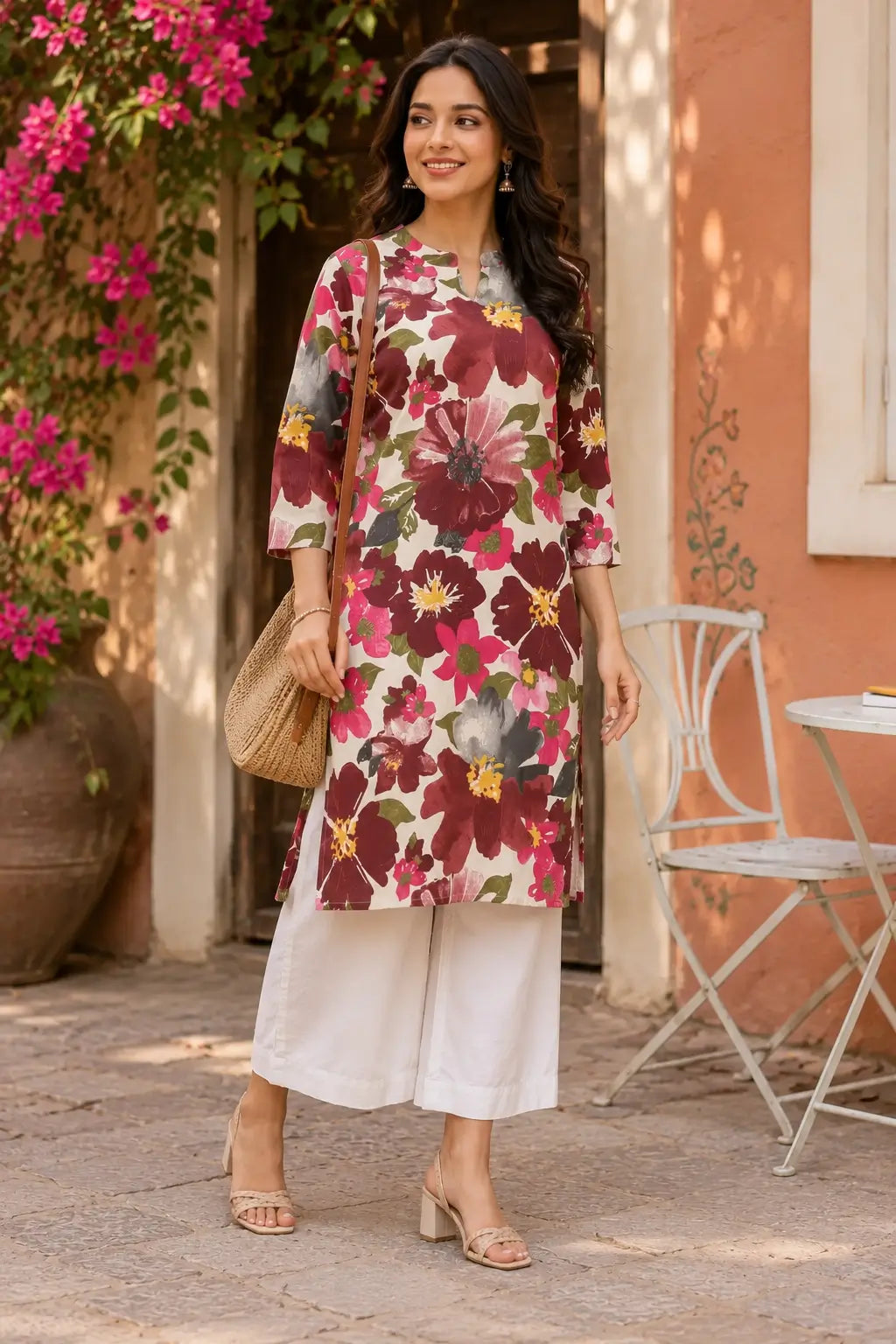
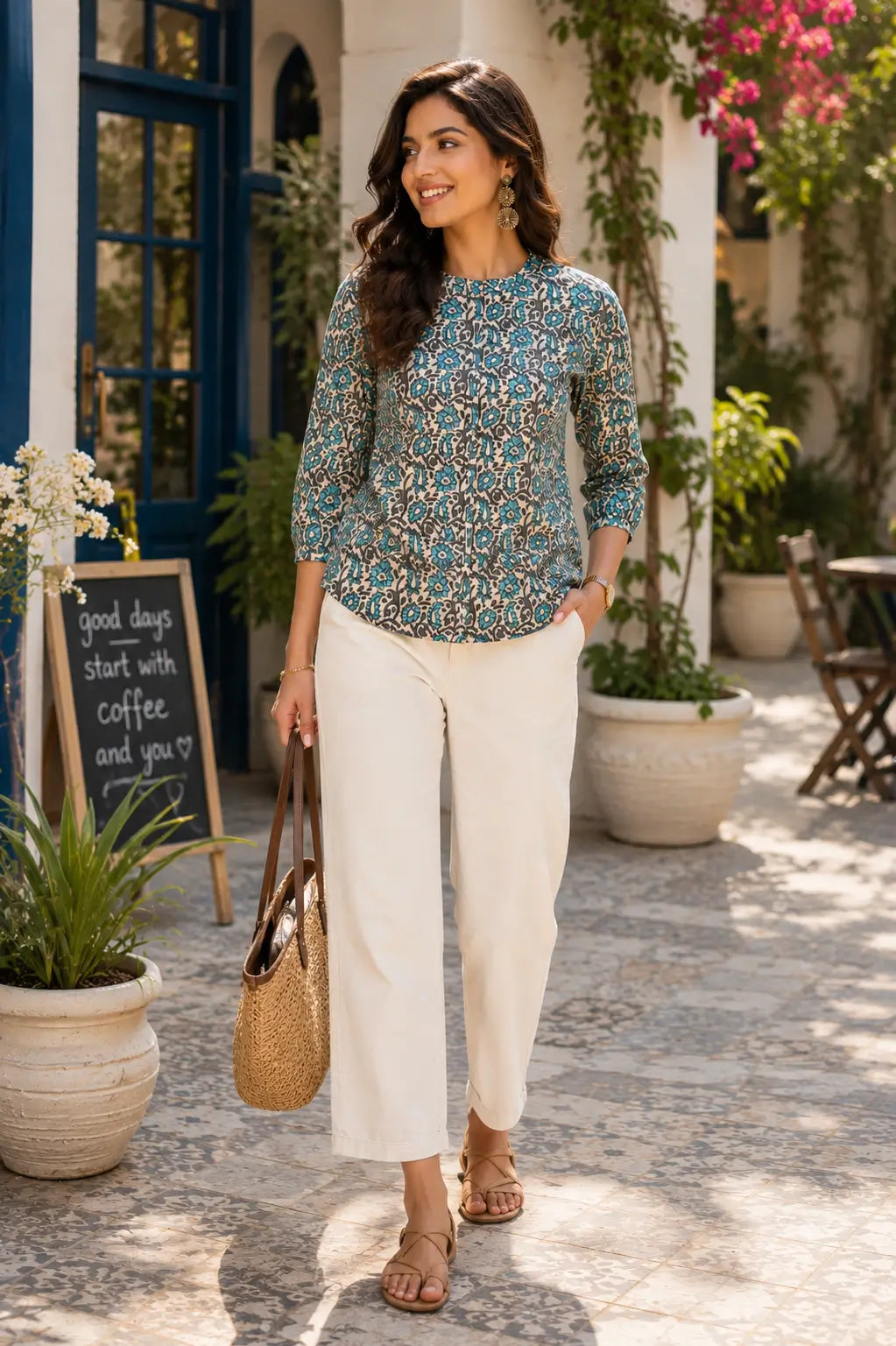
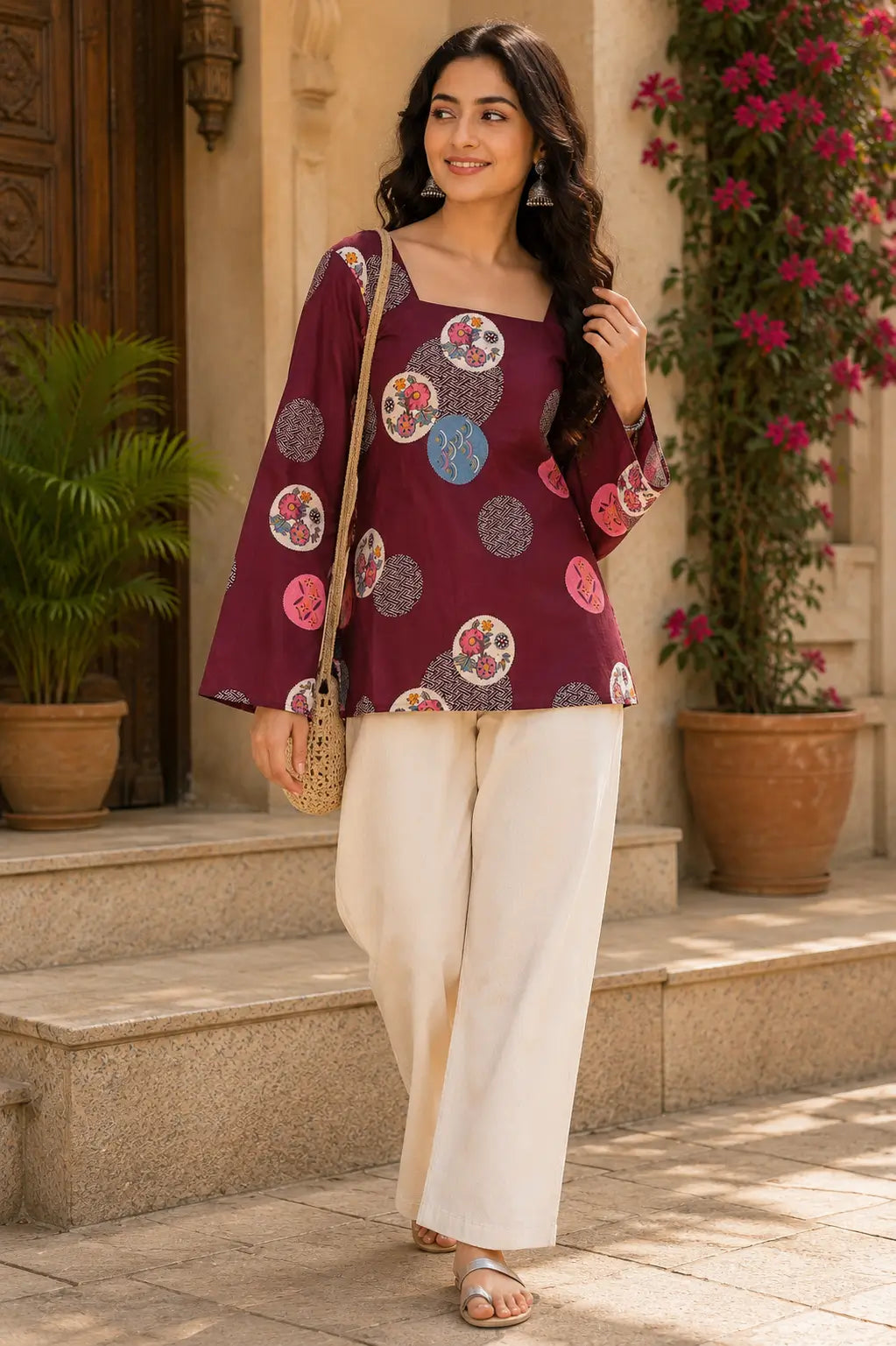


The best office-wear fabric is not simply the lightest or softest material.
An office kurti needs to stay comfortable during the commute, sit neatly through several working hours, handle regular washing and still look presentable by the end of the day.
Lightweight cotton is usually the safest all-round choice. Cotton flex provides more structure, cotton slub adds texture, rayon gives a softer drape and linen blends create a crisp professional look.
The right option depends on the office environment, commute, weather, washing routine and preferred silhouette.
Quick Answer: Which Fabric Is Best for Office Wear Kurtis?
Lightweight cotton is generally the most practical fabric for office wear kurtis because it balances comfort, breathability and easy maintenance.
Other useful options include:
- Cotton flex for structured office kurtis
- Cotton slub for textured smart-casual wear
- Rayon or viscose for soft, flowy silhouettes
- Cotton-rayon blends for balanced drape
- Linen or linen blends for crisp minimal styling
- Modal or lyocell blends for a smooth feel
- Selected lightweight crepe for wrinkle-conscious formal looks
No fabric is best in every situation. The weave, thickness, lining and garment fit influence the final comfort as much as the fibre name.
What Should an Office Fabric Do?
A useful office fabric should provide a practical balance of:
Breathability
It should not trap unnecessary heat during commuting or long wear.
Structure
The fabric should support the intended silhouette without becoming excessively stiff.
Seated comfort
It should not bunch, pull or become irritating after several hours at a desk.
Opacity
The garment should provide suitable coverage without requiring an unnecessarily heavy lining.
Wrinkle control
Some creasing is normal, but the fabric should still look presentable after sitting and travelling.
Maintenance
It should match the wearer’s washing, drying and ironing routine.
Drape
The fall of the fabric should suit the kurti style and workplace.
Office Fabric Comparison
| Fabric | General feel | Structure | Wrinkling | Best suited for | Main point to check |
|---|---|---|---|---|---|
| Lightweight cotton | Soft to structured | Moderate | Moderate | Daily office wear and commute | Weave and shrinkage |
| Cotton flex | Soft with structure | Good | Low to moderate | Straight and A-line office kurtis | Thickness and blend |
| Cotton slub | Textured | Moderate | Moderate | Smart-casual workwear | Fabric weight |
| Rayon or viscose | Soft and flowy | Low to moderate | Moderate | Printed and semi-formal kurtis | Cling and wash care |
| Cotton-rayon blend | Balanced drape | Moderate | Often manageable | All-season workwear | Fibre proportions |
| Linen | Crisp and textured | Good | High | Minimal and formal looks | Wrinkling |
| Linen blend | Structured | Good | Moderate to high | Office and meetings | Complete composition |
| Modal or lyocell blend | Smooth | Low to moderate | Usually manageable | Premium casual office wear | Blend and care |
| Lightweight crepe | Fluid to structured | Moderate | Often lower | Formal indoor settings | Breathability |
1. Lightweight Cotton
Cotton is one of the most dependable office-wear fabrics because it is available in several different weaves and structures.
Lightweight cotton can work for:
- Daily commuting
- Long office hours
- Regular washing
- Straight kurtis
- A-line kurtis
- Printed office wear
- Warm weather
Common cotton options include cambric, voile, soft handloom cotton and lightweight poplin.
However, not every cotton kurti feels the same.
A dense or heavily lined cotton garment may feel warmer than a lightweight cotton blend. Check the weave, thickness and lining before purchasing.
2. Cotton Flex
Cotton flex is useful when a kurti needs more structure than soft cotton or rayon.
It can help:
- Straight silhouettes hold shape
- Office prints look neater
- The garment remain presentable through the day
- The kurti pair well with formal trousers
- A-line styles avoid becoming excessively flowy
Cotton flex can be a practical choice for long office hours, but its comfort depends on fabric thickness and complete composition.
A lightweight cotton-flex garment may feel comfortable, while a dense version may be better suited to moderate weather or air-conditioned offices.
3. Cotton Slub
Cotton slub has a textured surface that gives the fabric a natural, smart-casual appearance.
It works well for:
- Solid kurtis
- Floral office kurtis
- Kurta-pant sets
- Minimal handwork
- Straight and controlled A-line styles
Slub texture can make a simple outfit feel more designed without requiring a loud print.
Check the thickness, because some slub fabrics may be heavier than lightweight cambric cotton.
4. Rayon and Viscose
Rayon and viscose are regenerated cellulose fabrics known for their soft feel and fluid drape.
They are useful for women who prefer:
- Flowy kurtis
- Printed styles
- A-line silhouettes
- Softer office outfits
- Semi-formal dressing
- Indoor or air-conditioned workspaces
A relaxed rayon kurti can look polished without feeling stiff.
In hot and humid conditions, however, the garment should not fit too closely. A soft fabric can still become uncomfortable if it clings around the waist or hips.
Follow the wash-care instructions carefully because rayon quality and finishing can vary.
Which Rayon Options Work for Office Wear?
Common office-wear options include:
Viscose rayon
Useful for printed kurtis and soft daily-wear silhouettes.
Modal-rich rayon blends
Can provide a smoother feel and may work for premium casual office wear.
Cotton-rayon blends
Combine some of cotton’s structure with rayon’s softer drape.
Rayon crepe constructions
May offer a cleaner fall, but the exact fibre composition and breathability should be checked.
The label should explain the complete composition. Terms such as “rayon feel” or “silky touch” do not provide enough information.
Cotton vs Rayon for Office Wear
Cotton is usually the stronger starting choice when regular washing, commuting and long-hour practicality matter most.
Rayon is useful when softness, print quality and a flowing silhouette are the main priorities.
| Priority | Better starting option |
|---|---|
| Daily commuting | Lightweight cotton |
| Frequent washing | Cotton |
| Structured straight kurti | Cotton or cotton flex |
| Flowy A-line kurti | Rayon |
| Indoor office | Cotton or rayon |
| Humid outdoor travel | Lightweight cotton |
| Softer drape | Rayon |
| Minimal ironing preference | Depends on the blend and finish |
For a more detailed comparison of washing, shrinkage, durability and daily wear, read our guide on cotton vs rayon kurtis.
5. Cotton-Rayon Blends
A cotton-rayon blend may offer a useful middle ground.
Depending on its construction, it can provide:
- More drape than pure structured cotton
- More shape than very soft rayon
- Manageable wrinkling
- Comfort across different seasons
- Suitability for printed office kurtis
The result depends on fibre proportions and fabric finishing.
Do not assume every blend performs the same way. Read the complete composition and wash-care label.
6. Linen and Linen Blends
Linen is known for its crisp texture and airy construction.
It can create a polished, minimal office look in:
- Straight kurtis
- Shirt-style kurtis
- Collar kurtis
- Short professional kurtis
- Solid or fine-striped styles
The main consideration is wrinkling.
Pure linen develops natural creases quickly. Some women like this relaxed texture, while others prefer a linen-cotton or linen-viscose blend for a more controlled appearance.
Linen-look synthetic fabric should not be treated as actual linen.
For a detailed comparison of maintenance, summer comfort and daily use, read our guide on linen vs cotton kurtis.
7. Modal and Lyocell Blends
Modal and lyocell are regenerated cellulose fibres often used in soft, smooth fabrics.
They may work for office wear when the garment has:
- Appropriate opacity
- Relaxed but controlled fit
- Suitable fabric thickness
- Manageable care instructions
- A neckline and silhouette appropriate for work
Check the complete blend because a small percentage of a fibre may not determine the overall fabric behaviour.
8. Lightweight Crepe
Crepe can provide a polished fall and may resist visible creasing better than some natural fabrics.
It may work for:
- Formal indoor offices
- Meetings
- Straight or A-line kurtis
- Travel-friendly workwear
- Low-ironing wardrobes
However, crepe covers many different fabric constructions. Some versions feel light and comfortable, while others are strongly synthetic and less breathable.
Check:
- Complete composition
- Fabric feel
- Lining
- Thickness
- Customer reviews
- Suitability for the commute
Best Fabric for Long Sitting Hours
For desk-heavy jobs, fabric should feel comfortable against the back, waist and armholes after several hours.
Useful options may include:
- Soft cotton
- Lightweight cotton flex
- Cotton slub
- Relaxed rayon
- Cotton-rayon blends
- Smooth modal blends
Avoid very stiff fabric, rough embroidery near the back, scratchy seams and thick lining.
Fit remains equally important. Even the right fabric can feel uncomfortable when the kurti is too tight around the waist or hips.
For a complete seated-fit checklist, read our guide to comfortable office clothes for long sitting hours.
Best Fabric for Commuting and Office AC
Many Indian workdays move between outdoor heat and strong indoor air conditioning.
For outdoor commuting
Prioritise:
- Breathability
- Lightweight construction
- Comfortable fit
- Easy washing
- Minimal layering
For air-conditioned offices
You may prefer:
- Cotton flex
- Cotton slub
- Rayon
- Linen blends
- Slightly structured fabrics
- A removable outer layer
A light stole, shrug or jacket is often more practical than choosing a heavy base kurti for the entire day.
Best Fabric by Office Environment
Corporate office
Cotton flex, poplin, linen blends, structured rayon and selected crepe can create a formal appearance.
Business-casual office
Cotton, slub cotton, cotton-rayon blends and printed rayon work well.
Creative workplace
Textured cotton, soft rayon, modern blends and subtle printed fabrics allow more flexibility.
Educational or active role
Lightweight cotton and comfortable blends support standing, walking and movement.
Hybrid workplace
Choose easy-care fabrics that look neat on video calls and remain practical for occasional office visits.
Fabric, Lining and Transparency
A lightweight fabric may require lining, but the lining should not make the garment unnecessarily warm.
Before buying, check:
- Whether the kurti is lined
- Whether lining is full or partial
- Lining material
- Number of layers
- Transparency in natural light
- Whether sleeves are lined
- Whether the lining fits more tightly than the outer garment
A breathable outer fabric with thick synthetic lining may still feel uncomfortable.
A Practical Cotton-Flex Example
Cotton flex can provide a straight, structured appearance while remaining suitable for regular wear when the fabric is not excessively heavy.
This blue printed cotton-flex long kurti for office wear is an example of a straight-fit, three-quarter-sleeve office kurti that can be paired with white or neutral pants.
How to Check Office Fabric Online
Before purchasing, check:
- Complete fibre composition
- Fabric close-up image
- Weave and texture
- Lining
- Transparency
- Model height and worn size
- Garment measurements
- Wash-care instructions
- Reviews mentioning comfort or shrinkage
- Return and exchange policy
Avoid making a decision only from terms such as:
- Premium fabric
- Cotton feel
- Office fabric
- Summer-friendly material
- Silky touch
- Wrinkle-free look
These phrases do not explain the actual composition or construction.
Choose Fabric According to Maintenance
Frequent machine washing
Lightweight cotton and practical blends are usually easier starting options.
Gentle washing possible
Rayon, modal blends and delicate fabrics may be considered.
Limited ironing time
Look for controlled blends, textured prints and fabrics where minor creases are less visible.
Frequent travel
Choose fabric that does not require perfect pressing after every journey.
Sensitive skin
Pay attention to fabric feel, seams, lining and surface embellishment rather than relying only on the fibre name.
Fabrics to Use Carefully for Daily Office Wear
These are not automatically unsuitable, but they require closer checking:
- Heavy polyester
- Dense nylon
- Thick satin
- Very stiff poplin
- Heavy denim-style fabric
- Thick synthetic lining
- Heavily embellished fabric
- Very clingy crepe
- Fabric with unclear composition
The final garment construction matters more than one fibre appearing on the label.
Complete Office-Wear Planning
Fabric is only one part of the office outfit.
Kurti style, length, bottom wear, workplace dress code, commute, colour and accessories also affect whether an outfit works.
Use our complete office wear kurti guide for working women to plan the entire workwear wardrobe.
Explore Office-Friendly Kurtis
Compare cotton, cotton-flex and printed long kurtis by fabric, measurements and fit.
Browse Rabric’s women’s long kurti collection to compare office and daily-wear silhouettes.
Frequently Asked Questions
Which fabric is best for office wear kurtis?
Lightweight cotton is generally the most practical all-round option. Cotton flex, rayon, slub cotton and linen blends suit different work routines.
Is rayon good for office kurtis?
Yes. Rayon works well for soft, printed and flowy office kurtis, particularly in indoor or air-conditioned environments.
Which rayon fabric is best for breathable office wear?
Lightweight viscose rayon and balanced cotton-rayon blends are useful starting options. The weave, fit and lining should still be checked.
Is cotton flex good for office wear?
Yes. Cotton flex can provide more structure than very soft cotton and works well for straight or A-line office kurtis.
Is linen suitable for office kurtis?
Yes. Linen creates a crisp, minimal look, but it wrinkles easily. Linen blends may be easier to maintain.
Which office fabric wrinkles the least?
Wrinkling varies by construction. Selected blends and lightweight crepe may show fewer creases than pure linen or some cotton fabrics.
Which fabric is best for long sitting hours?
Soft cotton, lightweight cotton flex, relaxed rayon and comfortable blends can work. Fit around the waist, hips and armholes is equally important.
Which fabric is suitable for an air-conditioned office?
Cotton flex, cotton slub, rayon, linen blends and structured lightweight fabrics can work, particularly with a removable outer layer.
Are synthetic blends bad for office wear?
Not automatically. A suitable blend may improve structure or maintenance. Check fibre proportions, breathability, lining and fabric feel.
Conclusion
The best fabric for office wear kurtis depends on the complete workday.
Choose lightweight cotton for dependable daily use, cotton flex for structure, rayon for a softer drape and linen blends for a crisp professional look.
Do not judge fabric only by its name. Weave, thickness, lining, fit and maintenance decide how the final kurti performs through commuting and long office hours.
About the Author
Aditi Garg writes and reviews Rabric’s fabric, fit and everyday-wear guides. Her content focuses on helping Indian working women choose practical fabrics for commuting, office routines and repeated daily use.

