
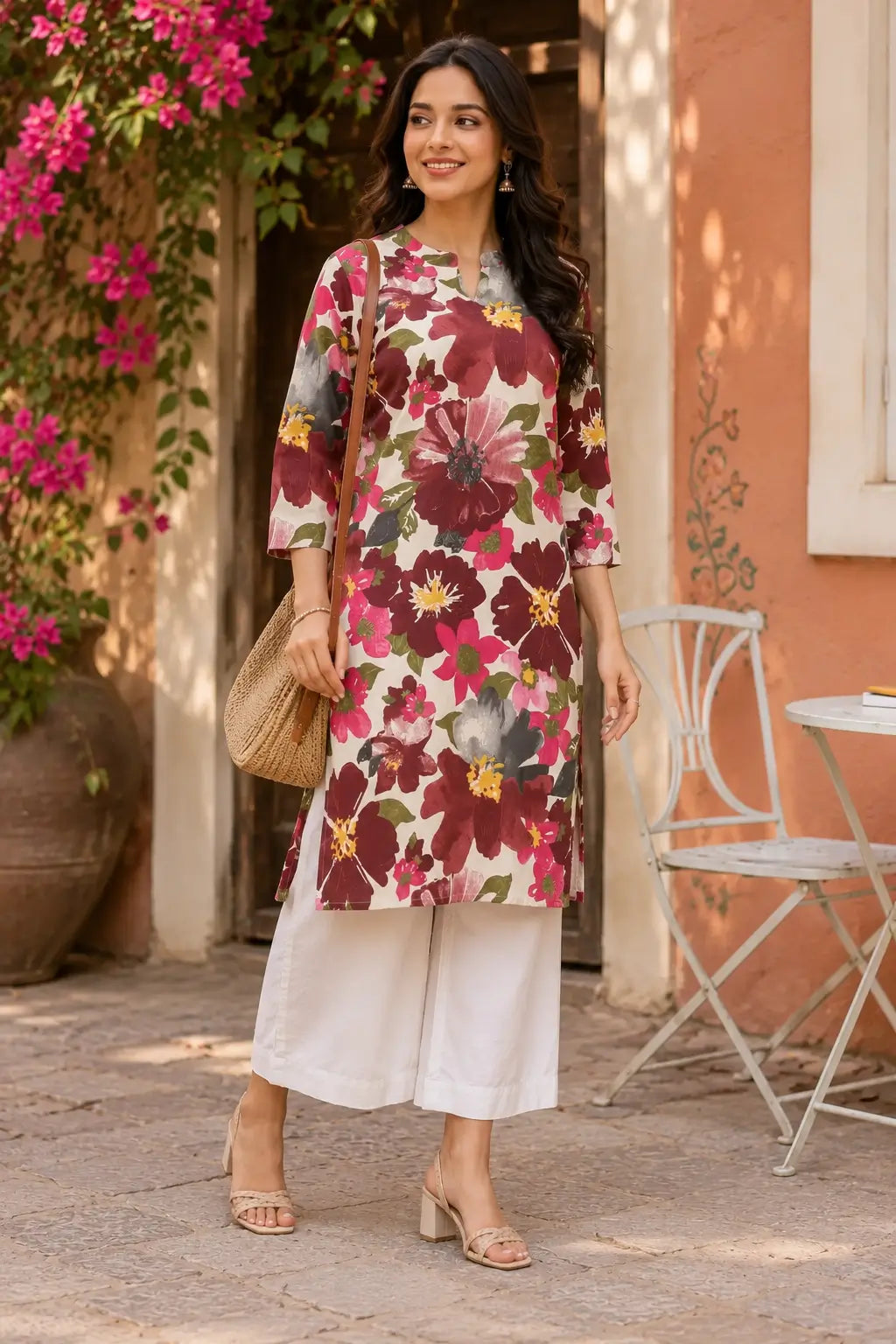
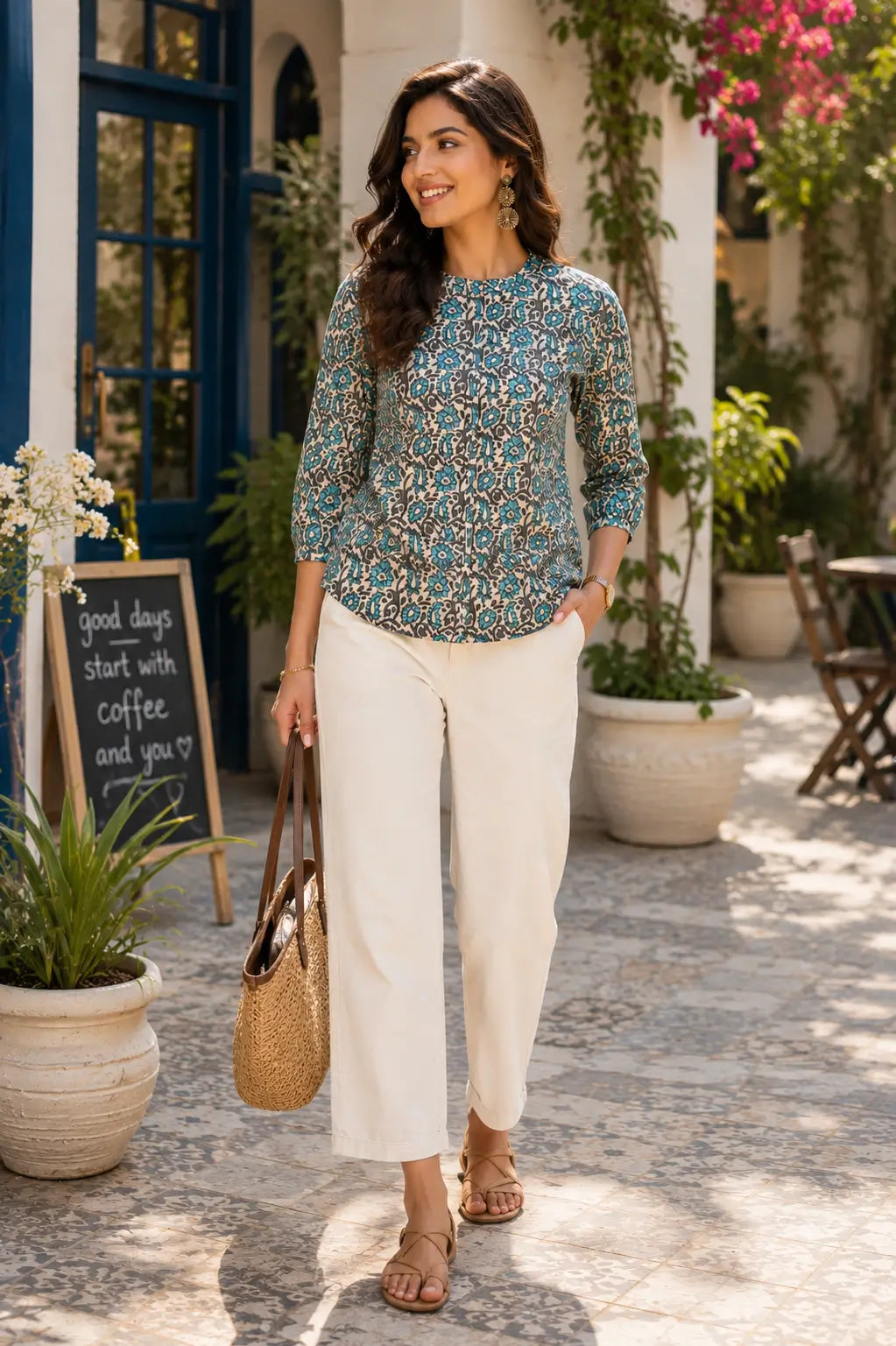
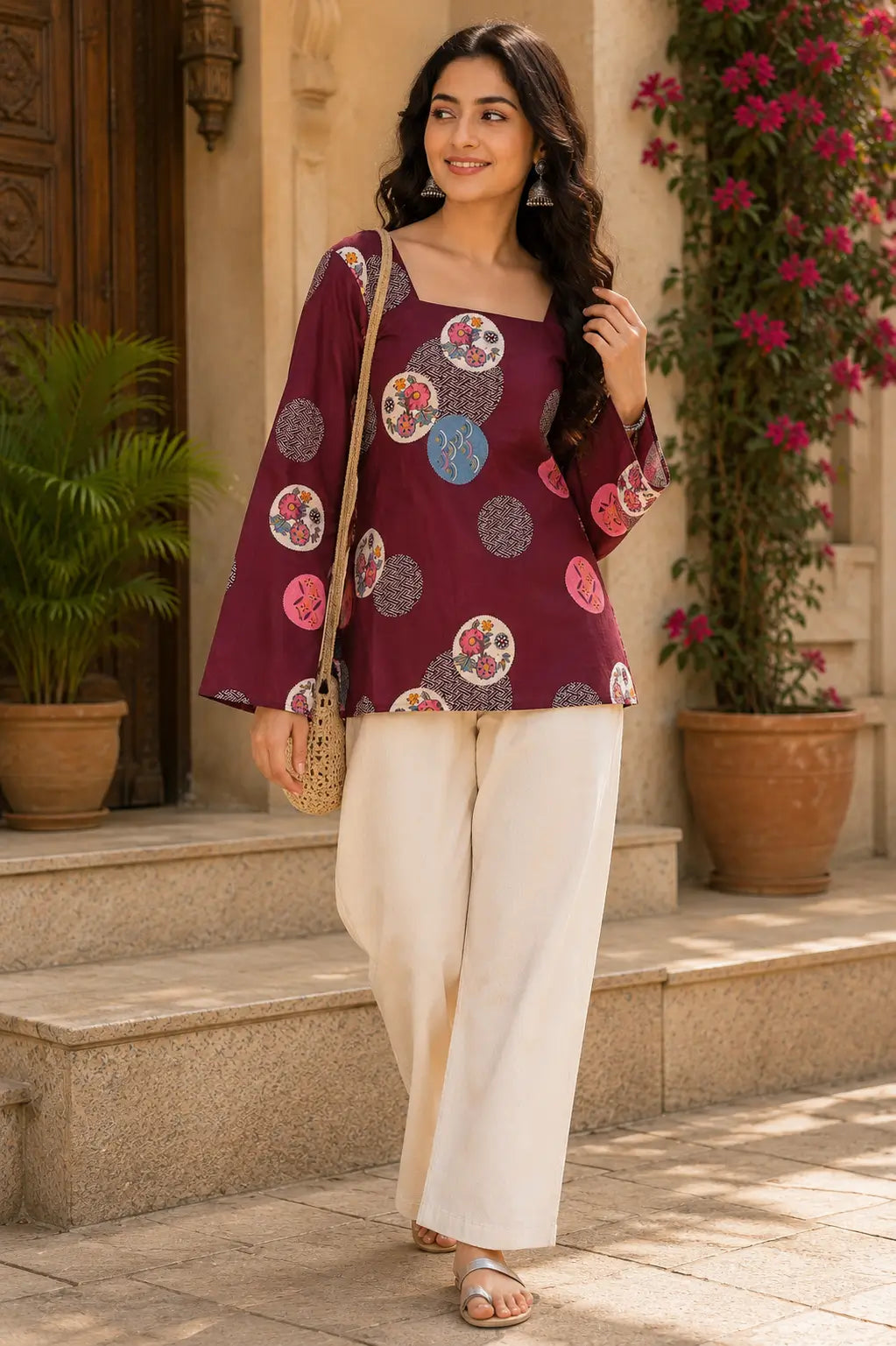


Quick answer: Comfort should be the first rule of everyday women’s fashion because daily clothing has to work through heat, travel, sitting, walking, work, errands and changing plans—not merely look attractive for a photograph. The most reliable comfortable women’s fashion in India combines an activity-appropriate fabric, enough ease for movement, thoughtful construction, a secure fit and simple care. When an outfit supports the body and the day, it is worn more often, styled more confidently and delivers better value.
Many women know the disappointment of an outfit that looks perfect on a hanger but becomes difficult within an hour.
The neckline needs repeated adjustment. The waistband feels tight while sitting. The fabric traps heat during the commute. The sleeves restrict movement. By evening, the outfit has shaped the whole day—and not in a good way.
That is why searches such as “comfortable women fashion India” are not really about choosing plain clothes. They reflect a practical question: how can a woman look polished, modern and expressive without spending the day managing her outfit?
At RABRIC, comfort-first fashion begins with a simple belief: everyday style should make real life easier. This guide explains how to evaluate fabric, fit, construction and versatility so that comfort becomes a design standard rather than an afterthought.
What Does Comfort-First Fashion Actually Mean?
Quick answer: Comfort-first fashion means choosing clothing that supports thermal comfort, movement, skin feel, practical use and personal confidence before considering short-lived trends. A comfortable garment should feel appropriate for the weather, allow normal sitting and movement, stay secure without repeated adjustment and remain easy enough to care for that it can be worn regularly.
Comfort is not a single feature. It has at least four everyday dimensions:
- Physical comfort: The garment does not pinch, pull, scratch, ride up or restrict ordinary movement.
- Thermal comfort: Heat and moisture can move well enough for the climate and activity.
- Practical comfort: The outfit is manageable during commuting, working, using stairs, carrying a bag and visiting different settings.
- Emotional comfort: The wearer feels appropriately covered, confident and like herself.
Textile research supports this broader view. Clothing comfort is assessed through both subjective responses—such as perceived warmth, wetness and satisfaction—and objective measures such as skin temperature, sweat loss and fabric heat or moisture behaviour.
A major textile-science review also noted that a comfort model may involve at least nine fabric-related properties, including thermal resistance, moisture absorption, friction and bending behaviour.
This is why “100% cotton” or “relaxed fit” alone cannot guarantee comfort. Fibre, fabric structure, garment pattern, weather, body preference and activity all work together.
Why Comfort Is Important in Women’s Fashion
1. Everyday Clothing Must Respond to Indian Weather
India does not offer one uniform clothing climate.
A woman may move from outdoor heat to an air-conditioned office, from dry afternoon weather to humid evening conditions, or from crowded public transport to a formal meeting.
The India Meteorological Department reported that 2025 was the country’s eighth-warmest year since national records began in 1901. It was 0.28°C above the 1991–2020 average, while 10 of the 15 warmest years occurred during 2011–2025.
In other words, approximately two-thirds of those 15 warmest years fell within the most recent 15-year period—an editorial calculation based on IMD’s data.
This does not mean every outfit must be ultra-light throughout the year. It means climate awareness should be part of everyday fashion for women in India.
A useful wardrobe needs breathable summer options, manageable monsoon clothing, light layers for air-conditioned spaces and warmer combinations for winter.
2. A Garment Should Allow Ordinary Movement
A daily outfit must work while sitting at a desk, bending, reaching, walking quickly, climbing stairs and travelling.
A style can be loose yet awkward if the armhole is tight. It can be stretchy yet uncomfortable if the waistband rolls. It can be correctly labelled in size but poorly balanced across the bust, hip or shoulder.
Research on clothing and heat suggests that loose-fitting clothing may improve airflow and heat dissipation in moderate heat. However, the evidence is activity-specific, and researchers note that more direct comparisons are needed.
The sensible takeaway is not “buy everything oversized.” It is to choose enough ease for air movement and mobility without losing stability or shape.
3. Comfortable Clothes Become Repeat Clothes
The most useful pieces in a wardrobe are rarely the ones that attract the most attention on the first day. They are the ones that solve the getting-dressed problem repeatedly.
A comfortable kurti can move from office to errands with a change of footwear. A coordinated set removes matching decisions. A kurta-pant set offers polish without the discomfort of rigid tailoring. A breathable top with a reliable neckline can be worn under a light layer and used across seasons.
This is why comfort can improve cost per wear. A lower-priced item worn once may offer less value than a carefully chosen item worn twenty times.
4. Comfort Supports Confidence Rather Than Competing With It
A woman appears more self-assured when she is not constantly pulling down a hem, fixing a dupatta, checking transparency or loosening a waistband.
Comfort does not automatically create confidence, but avoidable clothing problems can distract from it.
The goal is not to hide the body or follow rigid “body-type rules.” It is to choose clothing that provides the amount of shape, coverage and ease the wearer personally prefers.
Quick answer: Why is comfort important in women’s fashion?
Comfort is important because everyday clothes are worn for long hours and must support movement, weather, work and personal confidence. Comfortable clothing reduces the need for repeated adjustment, makes outfits easier to rewear and helps style remain practical throughout the day.
What Research Reveals About Clothing Comfort
This article uses an original editorial synthesis of official climate data and peer-reviewed textile research. It is not presented as a proprietary customer survey.
The purpose of the synthesis is to turn technical findings into useful shopping decisions.
| Research finding | Published data | Practical meaning for everyday clothing |
|---|---|---|
| Indian conditions are becoming warmer overall | IMD recorded 2025 at 0.28°C above the 1991–2020 average; 10 of the 15 warmest years occurred from 2011 to 2025. | Heat-aware fabrics, easy silhouettes and adaptable layers are practical wardrobe needs, not seasonal buzzwords. |
| Comfort depends on many properties | A textile-science review discussed nine fabric properties in one comfort index and noted that air permeability, wicking, drying and water-vapour transfer also matter. | A fibre label alone is not enough. Construction and finishing must also be considered. |
| Fabrics with similar uses can behave very differently | A 2025 laboratory study of 18 knitted fabrics found air-permeability values from 138 to 1,382 mm/s—a roughly tenfold range by editorial calculation. Fabric mass ranged from 109 to 310 g/m². | Two garments described as “knitted,” “lightweight” or made from related blends may feel very different in use. |
| Cotton construction changes performance | A study of 100% cotton knitted fabrics found that yarn linear density, stitch structure and relaxation affected air permeability, thermal insulation and water-vapour permeability. | Two cotton kurtis can differ greatly in openness, weight, stretch and heat retention. |
| Fit affects the clothing microclimate | A research review found that loose fit may improve airflow in moderate heat, while tight garments can reduce convective heat loss in some conditions. It also stressed that evidence is still limited. | Look for comfortable ease, not simply a larger size or an aggressively body-hugging fit. |
The strongest conclusion is simple: comfort is a system. It is created by the interaction of fabric, structure, fit, activity and environment.
Use the 7-S Everyday Comfort Audit
The following framework is an original editorial buying tool, not a laboratory standard. Use it in a trial room or while assessing an online product page.
| Test | Question to ask | A strong sign |
|---|---|---|
| Softness | Does the fabric feel pleasant at the neck, underarm and waist? | No scratchiness, harsh seams or irritating embellishment in contact areas |
| Space | Is there enough ease at the shoulder, bust, hip and thigh? | You can breathe, sit and move without pulling lines |
| Sweat response | Will the fabric and construction suit the weather and activity? | Air can move, moisture is manageable and the lining is not unnecessarily heavy |
| Structure | Does the garment stay in place without constant fixing? | Neckline, sleeve, waist and hem remain secure during movement |
| Sit test | Is it comfortable after sitting for at least five minutes? | Waistband stays flat, crotch does not pull and buttons do not strain |
| Season | Can it handle the actual setting—heat, rain, air conditioning or winter? | The outfit works alone or with a simple layer |
| Simple care | Will washing, drying and ironing fit your routine? | Care instructions are realistic enough for regular use |
Score every test from 0 to 2:
- 0: Does not meet the need
- 1: Partly meets the need
- 2: Meets the need well
A score of 11–14 suggests strong repeat-wear potential.
A score of 7–10 means the garment may be comfortable only in certain situations.
A score of 0–6 suggests it is more likely to become an occasional piece.
The score is intentionally practical. Personal preferences still matter. Someone who dislikes ironing may rate a crease-prone fabric differently from someone who values its texture and airflow.
For example, when applying this comfort audit to a daily outfit, a 100% cotton long kurti for daily wear can be checked for softness, breathable feel, regular fit, sleeve ease and simple care before deciding whether it deserves a place in your repeat-wear wardrobe.
Which Fabric Is Best for Comfortable Everyday Outfits?
Quick answer: There is no single best fabric for every woman or every Indian season. Lightweight cottons are often useful in warm weather, while rayon or viscose can provide soft drape, linen blends can encourage airflow, and some synthetic or blended fabrics can dry quickly and resist creasing. The best choice depends on fabric weight, weave or knit, fit, lining, activity and care needs.
| Fabric category | Common comfort advantage | What to check before buying |
|---|---|---|
| Lightweight cotton, cambric or mulmul | Familiar skin feel and suitability for many warm-weather outfits | Opacity, shrinkage guidance, fabric density and whether a heavy lining reduces airflow |
| Cotton slub | Textured appearance with an easy everyday feel | Whether the slub is soft or rough, how dense the fabric is and whether it relaxes after washing |
| Rayon or viscose | Fluid drape and softness that can work well in relaxed silhouettes | Care instructions, colour bleeding, shrinkage, cling and transparency |
| Linen or linen blends | Airy feel and natural texture | Creasing, stiffness, blend composition and whether the garment softens with wear |
| Lyocell or modal blends | Smooth hand feel and graceful drape | Fabric weight, blend percentage, care and whether the cut provides enough structure |
| Crepe, polyester or performance blends | May offer quick drying, wrinkle resistance or easy maintenance | Air permeability, lining, static, surface feel and suitability for high heat |
Cotton is useful, but it should not be treated as a magic word.
If you want to go deeper into fabric selection for hot and humid weather, this guide on breathable fabrics for summer kurtis explains how cotton, rayon, linen, mulmul and lightweight blends perform for daily wear in Indian summer.
In a 2025 fabric study, fibres with higher moisture regain, including cotton and viscose, generally dried more slowly than synthetics in the tested constructions. At the same time, air permeability varied widely across fabrics, showing why a lightweight, open construction may matter as much as fibre content.
When looking for breathable cotton kurtis for women in India, check more than the product title.
Look for fabric weight or thickness, a non-clingy silhouette, armhole ease, lining details, sleeve comfort and washing guidance. Product photographs should also show the garment in natural movement, not only a front-facing pose.
What Are the Best Comfortable Outfits for Women in India?
Quick answer: The best comfortable outfits for women in India include cotton or lightweight kurtis with straight pants, relaxed kurta-pant sets, breathable co-ord sets, short kurtis with easy bottoms and light suit sets. The right choice depends on weather, commute, dress code, movement and how long the outfit will be worn.
| Daily situation | Comfortable outfit formula | Why it works |
|---|---|---|
| Office day | Straight or A-line kurti with straight pants | Looks structured while allowing seated comfort and movement |
| Metro, auto or cab commute | Mid-length kurti with a secure neckline, comfortable pants and a practical pocket | Reduces adjustment and keeps essentials accessible |
| Errands and casual plans | Short kurti or breathable top with relaxed trousers | Easy to move in and simple to restyle |
| Work from home to outing | Soft co-ord set with a neat neckline | Requires little matching and can look intentional with minimal accessories |
| Travel day | Kurta-pant set with an elasticated or partially elasticated waist | Offers coverage, mobility and an already coordinated look |
| Hot summer day | Lightweight cotton kurti with airy bottoms | Minimises unnecessary layers and supports airflow |
| Monsoon routine | Mid-length outfit with a manageable hem and easy-dry footwear | Avoids heavy trailing fabric and improves practical mobility |
Comfortable women fashion India for daily wear should not be reduced to one uniform look.
For women who travel daily by metro, auto or office cab, comfort needs to work beyond office hours too. You can also read this practical guide on comfortable commute outfits for women to understand which outfits work better for walking, sitting, travel, office and after-work errands.
For regular office days, errands, college routines or simple everyday styling, daily wear kurtis for women are one of the easiest comfort-first choices because they can be styled with straight pants, palazzos, denim or relaxed trousers without making the outfit feel complicated.
Some women prefer straight silhouettes. Others feel better in A-line cuts, co-ords or softly flared kurtis. The common rule is that the outfit must suit the real day.
How Can Ethnic Wear Feel Comfortable All Day?
Comfortable ethnic wear for women depends on small construction choices that are easy to miss in a product photograph.
Check the Neckline
A neckline should feel secure without pressing the throat or requiring repeated pinning.
Deep necklines may be comfortable for one wearer and distracting for another. Choose according to personal preference and the setting.
Examine the Armhole and Sleeve
An armhole that is too high can pull while reaching. One that is too low can expose the inner garment or make the sleeve twist.
Three-quarter sleeves often work for office and daily routines, but only when the elbow area has enough ease.
Look at the Waist and Hip
Straight kurtis need sufficient hip ease to prevent horizontal pulling lines.
Pants should remain comfortable while sitting, not only while standing. A partially elasticated or full-elastic waist can be practical when the elastic is broad, soft and correctly tensioned.
A cotton slub kurta pant set with pocket is a good example of comfort-focused ethnic wear because the outfit combines breathable fabric, an easy silhouette and practical bottom detailing that can support office hours, travel and daily movement.
Consider the Dupatta Honestly
A dupatta can add elegance, coverage and colour, but it should suit the day.
For crowded commuting or hands-on work, a lighter, shorter or easily secured dupatta may be more practical. On other days, a kurta-pant set without a dupatta may offer the right balance.
Check Embellishment Placement
Embroidery, lace and handwork can look beautiful without reducing comfort when they are placed away from friction zones.
Inspect the reverse side of neck, sleeve and underarm details whenever possible.
What Makes Comfortable Office Wear for Women in India?
Comfortable office wear for women in India usually combines a breathable or climate-appropriate fabric, a polished but non-restrictive silhouette, a stable neckline, comfortable sleeves and bottoms that work while sitting.
Subtle prints, clean seams and one structured accessory can create a professional effect without rigid clothing.
What Are Comfortable Clothes for Indian Summer Women?
For shoppers using the search phrase “comfortable clothes for Indian summer women,” the practical answer is lightweight, non-clingy clothing with minimal unnecessary layering.
Consider cotton kurtis, airy co-ords, relaxed kurta-pant sets and light-coloured tops, but always check fabric density, lining and fit instead of relying only on the fibre label.
How Should You Buy Comfortable Ethnic Wear for Women Online in India?
Read the size chart, fabric composition, lining details, care instructions and return policy.
Compare your body measurements with the garment measurements if both are available. Look for photographs or videos that show sitting, walking, side views and the fall of the fabric.
Comfort-First Fashion Versus Trend-First Fashion
| Decision area | Comfort-first approach | Trend-first approach |
|---|---|---|
| Starting question | Will this work for my day? | Is this currently popular? |
| Fit | Allows chosen ease and normal movement | May prioritise a specific silhouette over wearability |
| Fabric | Selected for climate, skin feel and care | Selected mainly for visual effect |
| Styling | Versatile enough for repeat combinations | Often built around one complete look |
| Maintenance | Realistic for the wearer’s routine | Care burden may be discovered after purchase |
| Value | Measured through repeat wear | Measured through immediate novelty |
| Result | Style that supports daily life | Style that may work best for limited occasions |
Trend is not the enemy. The better approach is to filter trends through comfort.
A trending colour, neckline or print can be used in a silhouette that already works for the wearer.
How to Dress Comfortably and Stylishly Every Day
Quick answer: Start with the activity and weather, choose a fit that allows movement, build the outfit around one comfortable base, add one polished detail and finish with practical footwear and a useful bag. Style becomes easier when the foundation already feels good.
1. Dress for the Longest Part of the Day
An outfit should suit the activity that occupies the most time.
If six hours will be spent sitting, test the waistband while seated. If the day involves walking, prioritise hem length and footwear. If commuting is the hardest part, solve that first.
2. Build Around a Reliable Silhouette
Identify two or three silhouettes that consistently feel good.
These might be a straight kurti with trousers, an A-line kurti, a coordinated set or a short top with relaxed pants. Repeating a silhouette is not boring when colours, prints and details change.
3. Use a Simple Colour Formula
Choose one base colour, one supporting colour and one optional accent.
A beige kurta with brown print and neutral footwear can look polished without heavy accessorising. A muted co-ord can be lifted with earrings or a structured bag.
4. Add One Intentional Detail
A collar, pintuck, subtle embroidery, contrast buttons, a printed hem or a graceful sleeve can make comfortable clothing look designed rather than basic.
One strong detail is often enough for everyday wear.
5. Balance Volume
If the kurti is loose and flared, a cleaner bottom can create balance.
If the top is shorter and more structured, a relaxed straight pant can keep the outfit easy. These are options, not body-shape rules.
6. Choose Accessories That Do Not Create New Discomfort
Heavy earrings, unstable footwear and bags that dig into the shoulder can undo the comfort of the outfit.
For long days, choose accessories that remain pleasant after several hours.
7. Create Repeatable Outfit Formulas
Save combinations that work. For example:
- Printed kurti + straight pant + flats
- Co-ord set + minimal jewellery + tote
- Short kurti + relaxed trousers + sneakers
- Kurta-pant set + light dupatta + sandals
A formula reduces decision fatigue while leaving room for personal style.
When you do not want to spend time matching tops and bottoms every morning, comfortable co-ord sets for women can make everyday dressing easier while still keeping the look polished, coordinated and suitable for office, travel or casual plans.
How to Judge Comfort When Shopping Online
Online shopping removes the trial-room test, so the product page must provide enough evidence.
| Product-page detail | What it should help you judge | Warning sign |
|---|---|---|
| Size chart | Bust, waist, hip and length suitability | Only generic S/M/L labels with no measurements |
| Garment measurements | Actual ease compared with your body | Body and garment measurements are mixed without explanation |
| Fabric composition | Likely feel, drape and care | Vague terms such as “premium fabric” without composition |
| Fit description | Straight, relaxed, A-line, oversized or fitted | “Free size” used without usable dimensions |
| Model information | Approximate length and proportion | No model height, worn size or garment length |
| Lining and transparency | Layering needs and heat load | Light-coloured garment shown only against a dark background |
| Waist construction | Seated comfort and adjustability | Elastic waist shown but not described |
| Care instructions | Whether repeat use is realistic | No washing or shrinkage guidance |
| Return or exchange policy | Risk control if fit differs | Policy is difficult to locate or understand |
When using a size chart, measure over the undergarments normally worn with the outfit.
Do not choose a smaller size merely because it matches an aspirational number. Check the garment’s intended ease: a straight kurti and a loose co-ord top may require different measurement gaps.
Body type can guide styling preference, but it should not become a restriction.
A better question is: where do you want shape, and where do you need ease?
Some women prefer shoulder definition with hip room. Others want a flowing top with a straight bottom. Comfort is personal but can still be evaluated systematically.
Why Choose RABRIC for Comfort-First Everyday Wear?
The current online range brings together daily-wear kurtis, long kurtis, kurta-pant sets and coordinated outfits positioned for office hours, travel, casual plans and regular routines.
This variety matters because one outfit cannot solve every comfort need. A relaxed co-ord may work for a casual workday, while a straight kurti can provide a cleaner professional look. A coordinated kurta-pant set can reduce styling decisions on busy mornings, while a short kurti may be easier to combine with bottoms already available in the wardrobe.
Current collection descriptions emphasise breathable fabrics, comfortable fits and versatile silhouettes designed for extended use rather than occasion-only dressing.
Shoppers should still assess every product individually. Check its measurements, fabric composition, lining, sleeve shape, care instructions and intended fit before ordering.
A comfort-first assortment becomes genuinely useful when it provides different solutions for different routines while allowing the wearer to retain her own colours, prints and styling preferences.
People Also Ask
Is Comfort More Important Than Fashion?
Comfort should be the first filter for everyday clothing, while style determines how the comfortable base is expressed.
For occasional wear, a woman may accept more structure or maintenance. For daily wear, an outfit that cannot support ordinary movement and weather is unlikely to be genuinely useful.
What Makes Women’s Clothing Comfortable?
Comfort comes from suitable fabric behaviour, adequate ease, soft contact areas, secure construction, manageable weight, weather suitability and realistic care.
Personal factors such as coverage preference, skin sensitivity and daily activity also matter.
What Is the Most Comfortable Everyday Outfit for Women?
There is no universal winner, but a breathable kurti with straight pants, a relaxed co-ord set or a light kurta-pant set works for many routines.
The best option is the one that passes the sitting, movement, weather and care tests.
Can Ethnic Wear Be Comfortable for Daily Use?
Yes. Comfortable ethnic wear for women can include straight kurtis, A-line kurtis, co-ords and kurta-pant sets made with manageable fabrics and non-restrictive patterns.
Neckline stability, armhole ease, waistband comfort and dupatta practicality are as important as the fabric.
Which Fabric Is Best for Daily Wear in India?
Lightweight cotton is a popular starting point, but no fibre is best in every climate or activity.
Fabric density, construction, moisture behaviour, lining and care can make two garments with the same fibre content perform differently.
Conclusion: Make Style Earn Its Place in Your Day
Comfort is not the absence of fashion. It is the foundation that allows fashion to remain present through the whole day.
The best wardrobe does not force a choice between looking good and feeling at ease. It uses breathable or activity-appropriate fabrics, thoughtful silhouettes, secure construction and personal styling to achieve both.
That is the real promise of comfortable everyday outfits for women: fewer distractions, more repeat wear and a stronger sense that the clothes belong to the life being lived.
Explore the comfort-first everyday collection when you are ready to choose pieces you can genuinely repeat, restyle and enjoy—not merely admire.
Frequently Asked Questions
1. Which Fabric Should I Choose for Comfortable Daily Wear?
Start with the weather and activity.
Lightweight cotton, cambric, mulmul, rayon, viscose, linen blends and soft cellulosic blends can work well in different situations. Check weight, weave, lining, transparency and care because fibre content alone does not guarantee comfort.
2. How Do I Use a Size Chart Correctly When Buying Women’s Clothing Online?
Take fresh bust, waist and hip measurements using a soft tape.
Compare them with the seller’s chart and confirm whether the numbers refer to body or finished-garment measurements. Also check garment length, model height, worn size and intended fit.
When between sizes, consider the fabric’s stretch and the amount of ease you prefer.
3. What Should I Look for in a Daily-Wear Kurti?
Look for comfortable armholes, a stable neckline, sufficient hip ease, manageable length, neat seams and fabric suited to your climate.
Pockets, washability and opacity can make a major difference in regular use. A daily-wear kurti should remain comfortable while sitting as well as standing.
4. How Can I Judge Whether an Online Outfit Will Be Comfortable?
Study the size chart, fabric composition, fit description, model information, side and back photographs, lining details, waistband construction and care instructions.
Customer reviews can help, but compare comments from buyers with similar fit preferences rather than treating every review as universally applicable.
5. Which Comfortable Outfit Suits My Body Type?
Choose according to the areas where you want definition and the areas where you need ease.
Straight kurtis can create a clean line, A-line styles provide more lower-body room, and coordinated sets can simplify proportion. The right choice is the one that allows movement and makes you feel secure; body type should guide, not restrict.
Author Bio
Aditi Garg writes about ethnicwear fabrics, daily-wear garment development and comfort-focused clothing for Indian conditions. Her work helps readers assess breathability, garment construction, fit, care and versatility when choosing kurtis and other everyday outfits.
Research Sources Used for the Blog
This article is based on an original editorial synthesis of the India Meteorological Department’s 2025 climate statement; a peer-reviewed review of thermophysiological clothing comfort; a study of structural differences in 100% cotton knitted fabrics; a research review on clothing fit, airflow and heat; and a 2025 laboratory comparison of 18 knitted fabrics. Together, these sources show that clothing comfort is influenced by climate, air permeability, moisture transfer, fabric mass, thickness, knit or weave, garment fit and individual perception—not by a fibre name alone. The cited workwear and exercise studies are not direct tests of Indian ethnicwear, so their findings are used to explain clothing-comfort mechanisms rather than to claim that one fabric will perform identically in every kurti or co-ord set.

