
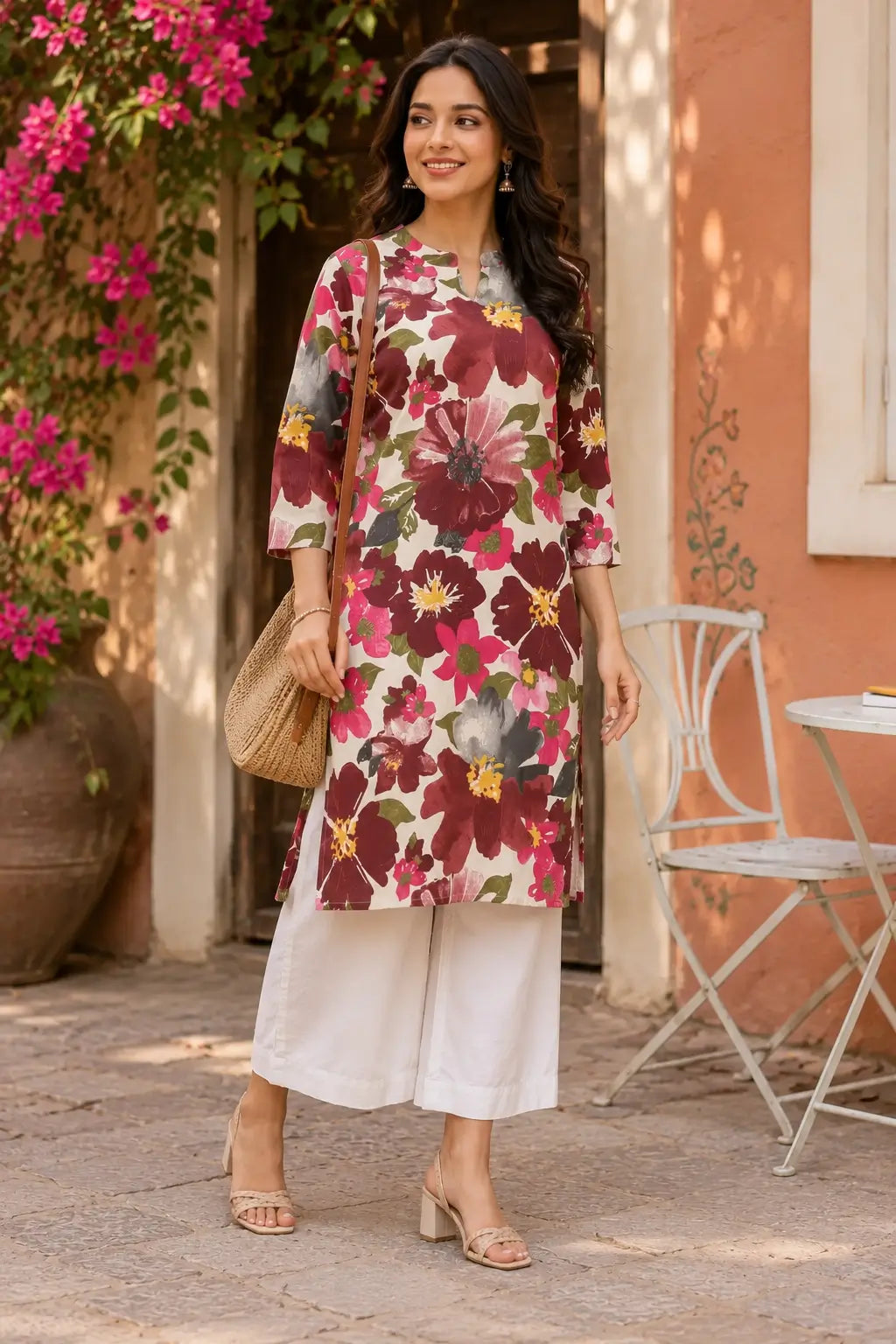
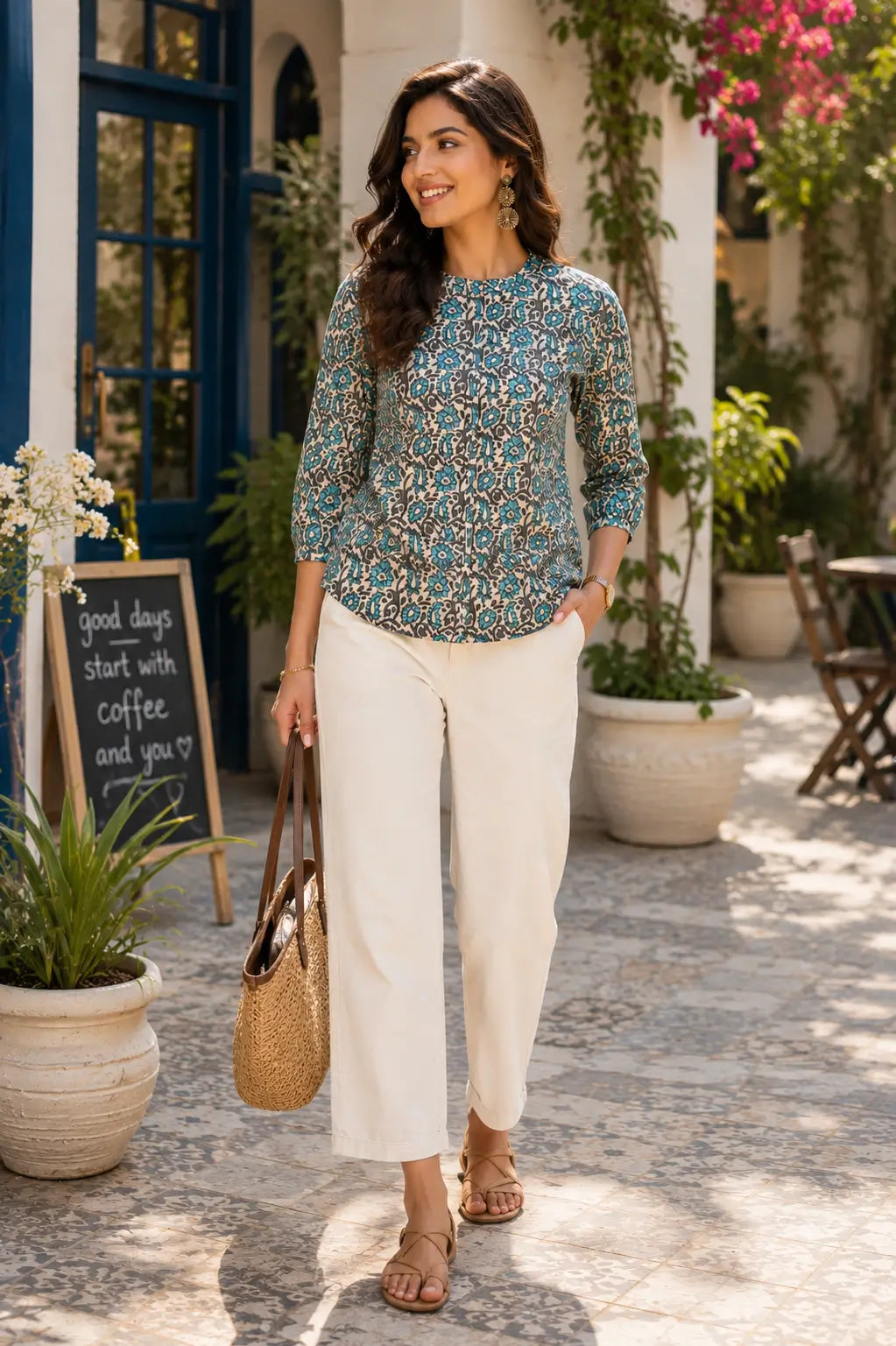
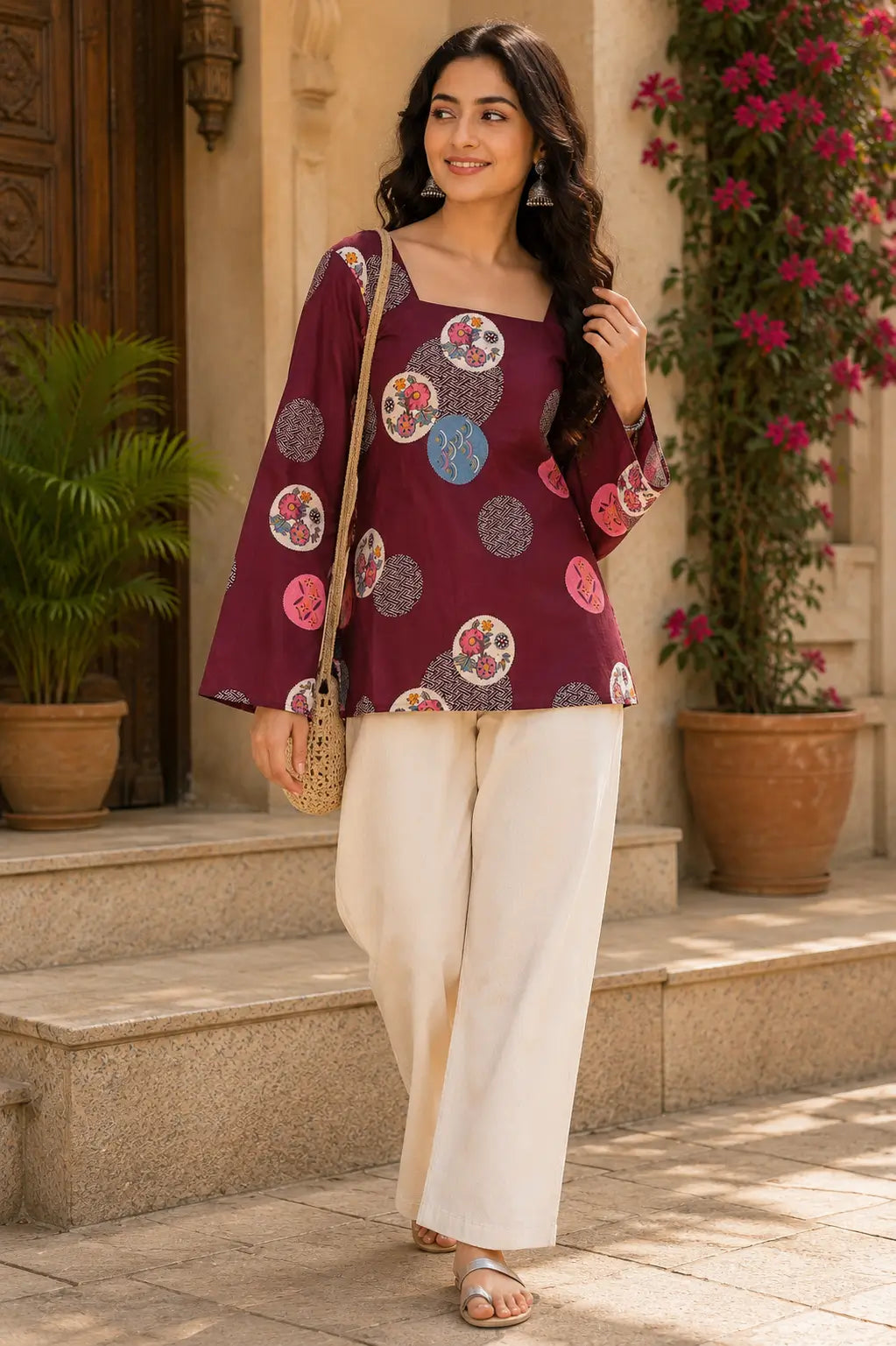


Building an office wardrobe does not mean buying a separate outfit for every working day. A small, well-planned kurti wardrobe can create several combinations without making your daily looks feel repetitive.
The most practical approach is to choose five versatile upper pieces, three dependable bottoms and a small set of accessories that work together.
The goal is simple: fewer morning decisions, easier laundry planning and more outfits from the clothes you already own.
Quick Answer: What Should a Five-Day Office Kurti Wardrobe Include?
A useful Monday-to-Friday office kurti wardrobe can include:
- One formal straight kurti
- One lightweight printed cotton kurti
- One comfortable A-line kurti
- One professional short kurti
- One coordinated kurta-pant set
- One light neutral bottom
- One dark neutral bottom
- One alternate trouser or palazzo
- Two pairs of comfortable footwear
- One structured everyday bag
Choose colours that can be mixed instead of buying five completely unrelated outfits.
Start with Your Actual Work Routine
Before selecting clothes, write down what a normal workweek looks like.
Consider:
- Number of formal meetings
- Length of daily commute
- Hours spent sitting
- Whether the office is air-conditioned
- Whether Fridays are casual
- Frequency of client interaction
- Laundry schedule
- Whether after-office plans are common
A corporate office may need more structured pieces, while a creative workplace may allow short kurtis, clean denim and brighter prints.
For broader guidance covering office dress codes, fabrics and professional styling, read our complete office-wear kurti guide for working women.
The 5-Kurti and 3-Bottom Formula
A practical foundation can be created using five tops and three bottoms.
Five upper pieces
- Solid or subtle straight kurti
- Printed cotton kurti
- Relaxed A-line kurti
- Structured short kurti
- Kurta-pant set or office-friendly co-ord
Three bottoms
- Beige, cream or white straight pant
- Black, navy or charcoal trouser
- One alternate bottom such as an olive pant, palazzo or clean denim
The pieces should share a related colour palette. For example, navy, beige, blue, olive and dusty pink can work with black, white and neutral bottoms.
Monday: Start with a Structured Straight Kurti
Monday often includes planning meetings, follow-ups and a more formal start to the week.
Choose:
- A straight silhouette
- A neutral or deep colour
- Three-quarter sleeves
- Minimal jewellery
- Cigarette or straight pants
- Loafers or closed flats
Useful colours include navy, olive, grey, maroon and muted teal.
A straight kurti helps create a clean look without requiring complicated styling.
Tuesday: Wear a Printed Cotton Kurti
A printed cotton kurti can make the second day feel lighter without looking too casual.
Choose:
- Small floral or geometric print
- Breathable fabric
- Comfortable regular fit
- Plain bottom wear
- Simple earrings
- Structured tote
When the kurti has a print, avoid adding a heavily printed bottom or dupatta.
Wednesday: Prioritise Midweek Comfort
By the middle of the week, a softer A-line or relaxed long kurti can feel easier during long sitting hours.
Look for:
- Sufficient waist and hip room
- Comfortable armholes
- Side slits
- Lightweight fabric
- Soft straight pants
- Flat footwear
The garment should still look neat after sitting, walking and commuting.
To compare straight, A-line, shirt-style and other workplace silhouettes, read our guide to the best kurti styles for office wear.
Thursday: Add a Professional Short Kurti
A structured short kurti can refresh the weekly wardrobe without requiring another long kurti.
Pair it with:
- Formal ankle trousers
- Cigarette pants
- Medium-width wide-leg pants
- Clean dark denim in casual offices
- Loafers or flats
- Minimal jewellery
The short kurti should provide comfortable coverage while sitting and should not become tight around the hips.
Friday: Choose a Coordinated Set
A kurta-pant set can simplify Friday dressing because the upper and bottom pieces are already coordinated.
It works well when:
- The print is balanced
- The neckline is work-appropriate
- The pants allow comfortable sitting
- The fabric suits the commute
- Accessories remain minimal
This cotton slub kurta-pant set for office and everyday wear is an example of a coordinated outfit that can be kept simple for office or styled differently for a casual plan.
Choose Fabrics According to Wear Frequency
The fabric should match how often the garment will be washed and worn.
Cotton
Useful for regular wear, commuting and frequent washing.
Cotton flex
Offers more shape and can work for formal straight kurtis.
Cotton slub
Provides a textured look suitable for smart-casual workdays.
Rayon
Useful for softer, flowy silhouettes, but often benefits from gentler handling.
Linen blend
Works when you prefer a crisp look and do not mind some wrinkling.
Practical blends
Can provide easier maintenance, depending on composition and fabric thickness.
For a deeper comparison, read our guide to the best fabric for office wear kurtis.
Plan the Wardrobe Around Your Commute
A wardrobe for a 15-minute cab journey may be different from one built for daily metro travel.
For a long commute, prioritise:
- Comfortable shoulders
- Practical kurti length
- Manageable side slits
- Easy-care fabrics
- Minimal heavy layering
- Secure neckline
- Footwear suitable for walking
- A bag that does not damage delicate fabric
A commute-heavy wardrobe should contain more straight and controlled silhouettes than very flared or heavily detailed outfits.
Read this practical guide to comfortable commute outfits for working women for metro, auto and office-cab dressing.
Repeat Outfits Without Looking Repetitive
Repeating clothes is normal. The aim is to change the combination, not hide the fact that the same kurti is being used again.
Try these methods:
- Change black pants to beige pants
- Replace flats with loafers
- Add or remove a lightweight dupatta
- Use a different bag
- Change small studs to hoops
- Pair a long kurti with ankle trousers instead of leggings
- Wear the same short kurti with formal pants instead of jeans
- Use a neutral shrug in an air-conditioned office
Do not add extra accessories simply to make an outfit appear new. The result should still look professional.
For balanced styling ideas, read our guide on smart ethnic wear without looking overdressed.
Use a Controlled Colour Palette
A wardrobe becomes easier to mix when the colours relate to one another.
Neutral base colours
- Black
- White
- Beige
- Cream
- Navy
- Grey
Easy accent colours
- Olive
- Dusty pink
- Teal
- Maroon
- Mustard
- Lavender
- Soft blue
A kurti should ideally work with at least two of the three chosen bottoms.
Build a Laundry-Friendly Rotation
Do not plan the wardrobe assuming every item will always be ready to wear.
A practical rotation should consider:
- Which days clothes are washed
- How long each fabric takes to dry
- Whether ironing is required
- Which colours need separate washing
- Whether a backup office outfit is available
- Whether the garment can be comfortably repeated within two weeks
Keep at least one easy-care outfit ready for days when laundry or ironing gets delayed.
Create a Backup Office Outfit
An emergency office outfit should be:
- Easy to wash
- Quick to style
- Comfortable
- Suitable for an unexpected meeting
- Compatible with available footwear and bag
- Free from complicated layering
A solid or small-print straight kurti with neutral pants is usually a useful backup.
Adjust the Wardrobe by Season
Summer
Use lightweight cotton, cotton flex, cotton slub and breathable blends.
Monsoon
Choose manageable lengths, darker bottoms and fabrics that do not become difficult to handle when damp.
Mild winter
Layer lightweight kurtis with shrugs, jackets, stoles or closed footwear.
Air-conditioned offices
Keep one neutral outer layer that works with most of the wardrobe.
Budget Before Buying
Divide purchases into three groups:
Must-have
Pieces required to complete missing combinations.
Useful addition
Items that create several new combinations.
Optional trend
Pieces that look attractive but work with very few existing clothes.
A new kurti is a better purchase when it can be paired with at least two bottoms already owned.
Shop the Wardrobe as a System
Instead of purchasing random pieces, compare colour, fabric and fit with the wardrobe you already have.
Rabric’s kurta-pant set collection can be used to compare coordinated outfits that reduce the effort of matching separates.
Frequently Asked Questions
How many office kurtis should a working woman own?
Five to eight versatile pieces can create a useful rotation, depending on laundry frequency and office dress code.
Can the same kurti be repeated in one week?
Yes. Change the bottom, footwear, bag or outer layer to create a different combination.
Which colours are easiest to repeat?
Navy, olive, beige, cream, grey, maroon and subtle prints usually pair with several neutral bottoms.
Should every day have a different fabric?
No. Use fabrics according to weather, washing requirements and comfort rather than forcing variety.
What is the best Friday office outfit?
A short kurti with trousers, a coordinated kurta-pant set or an understated co-ord can work, depending on the workplace.
How many bottoms are needed for five office kurtis?
Three well-chosen bottoms can create several combinations when their colours work with all five kurtis.
How can I avoid impulse buying?
Check whether the new piece works with at least two existing bottoms and suits a real gap in the wardrobe.
Conclusion
A useful office wardrobe is not measured by the number of clothes it contains. It is measured by how easily the pieces work together.
Five carefully selected kurtis, three versatile bottoms and a small set of practical accessories can simplify an entire workweek.
Start with your actual routine, choose a controlled colour palette and buy pieces that can be repeated without becoming difficult to style.
About the Author
Aditi Garg writes and reviews Rabric’s fabric, fit and everyday-wear guides. Her content focuses on practical wardrobes for Indian working women, commuters and everyday ethnic-wear users.

