
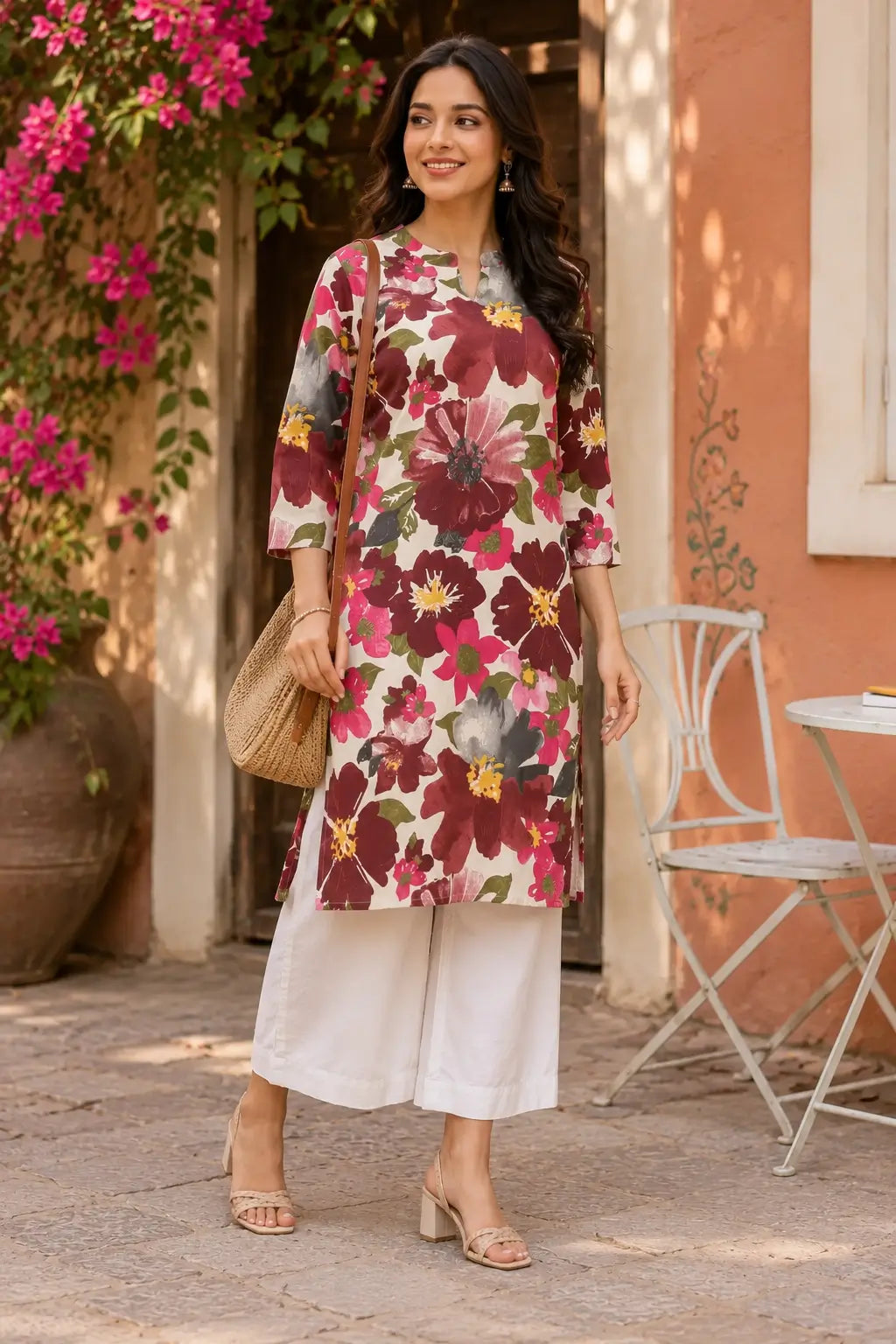
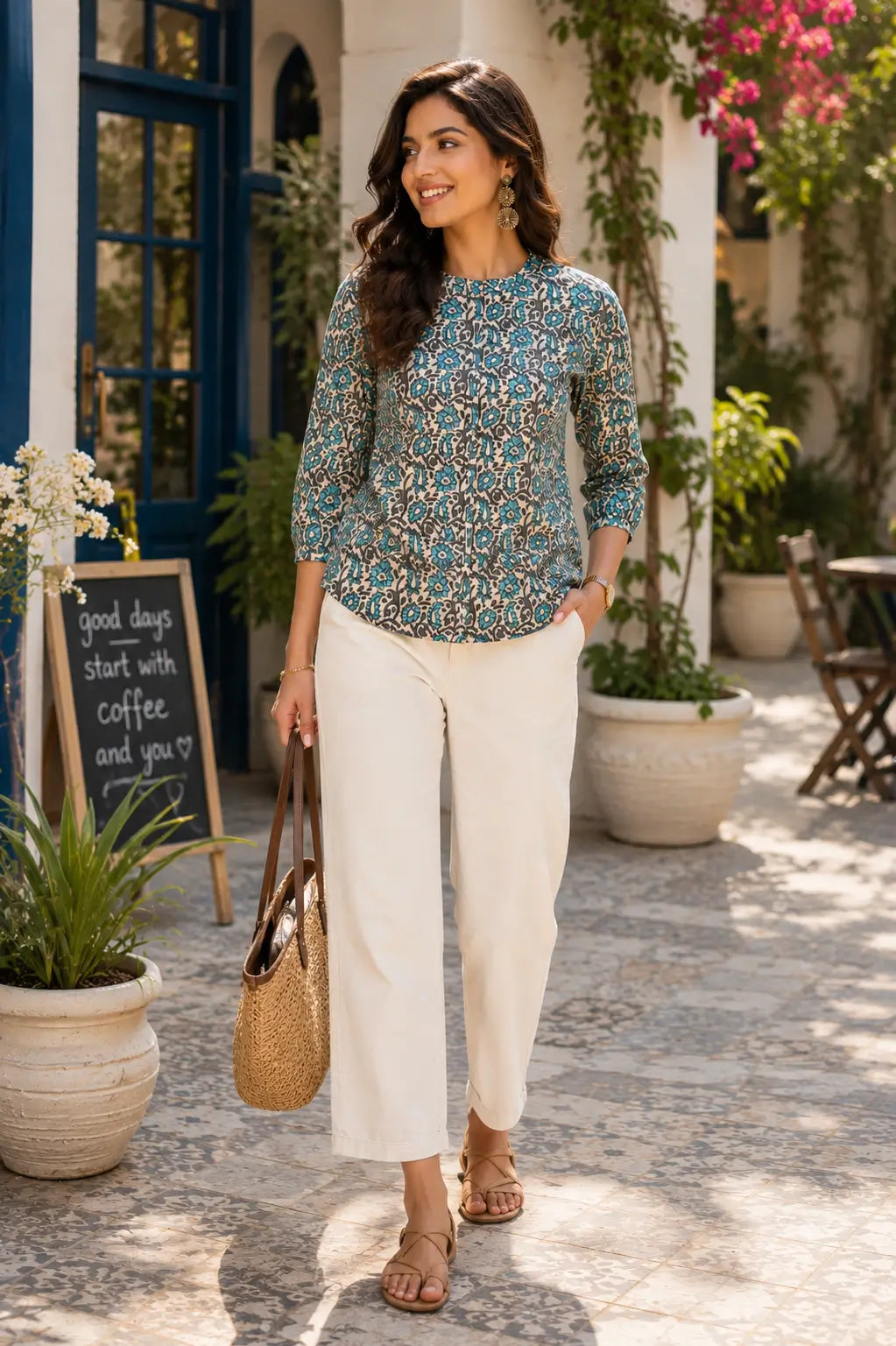
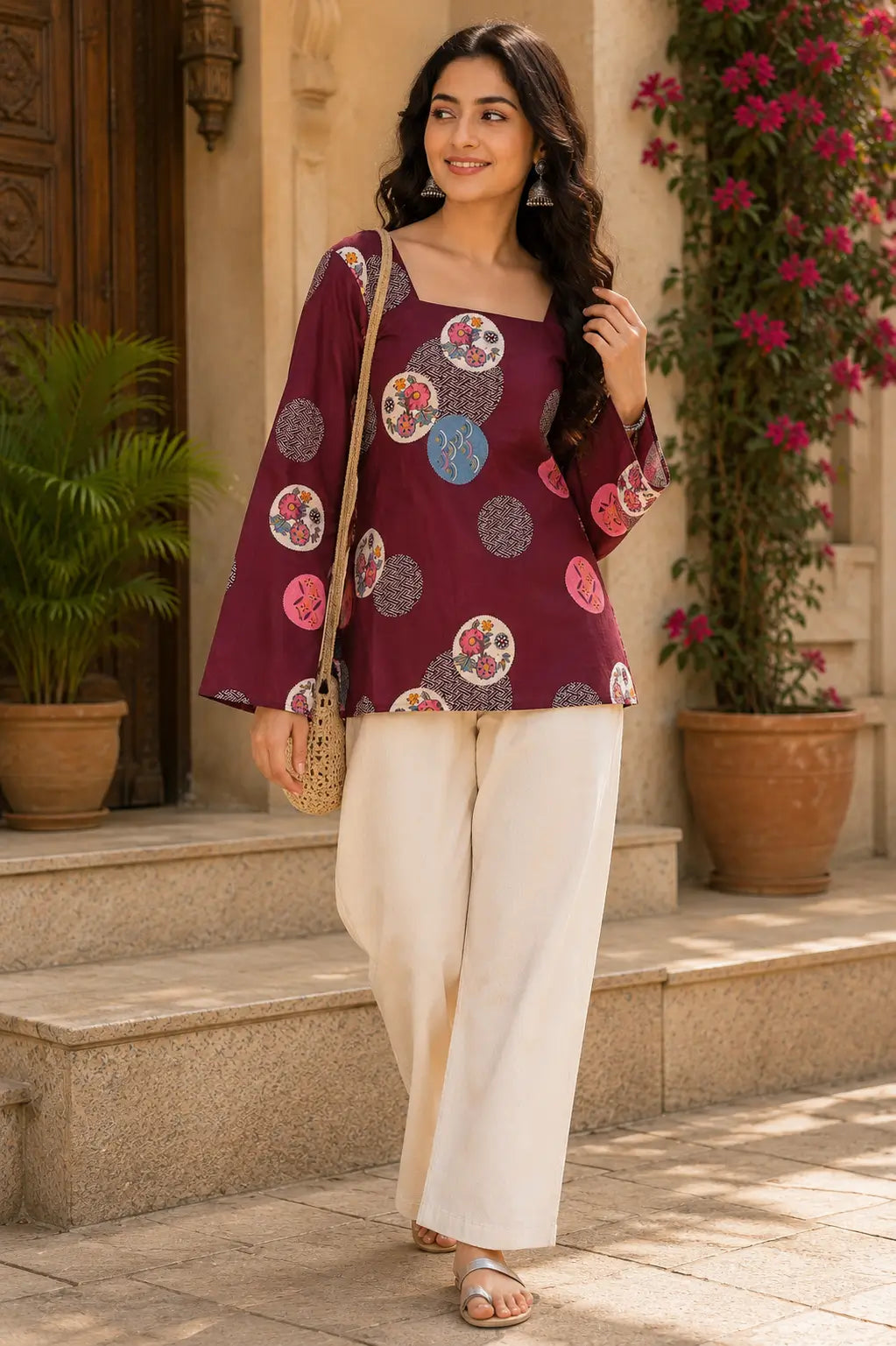


Cotton and rayon are two of the most commonly used fabrics for women’s kurtis, but they do not feel, fall or perform in the same way.
Cotton is generally preferred for frequent daily use because it offers a familiar skin feel, works well for long hours and is usually easier to wash regularly. Rayon is preferred when you want a softer, smoother and more fluid silhouette.
Neither fabric is automatically better for every woman. The right choice depends on your local weather, washing routine, working hours, commute, preferred fit and whether you like a structured or flowy kurti.
This cotton vs rayon kurti comparison explains how both fabrics perform in daily wear, summer weather, office use, travel, washing and long-term maintenance.
Quick Answer: Cotton or Rayon—Which Is Better for Daily Wear?
Cotton is generally the better choice for frequent daily wear, long working hours and regular washing. It is practical for office, college, commuting and casual use.
Rayon is better when you prefer:
- A softer fabric feel
- A fluid and flowy drape
- Printed or semi-formal kurtis
- A lightweight-looking silhouette
- Indoor or moderate-weather use
Choose cotton when durability, repeated washing and all-day practicality matter most. Choose rayon when softness, drape and appearance are your main priorities.
Cotton vs Rayon Kurti: Quick Comparison
| Factor | Cotton kurti | Rayon kurti |
|---|---|---|
| Fabric origin | Natural plant fibre | Regenerated cellulose fibre |
| General feel | Soft to structured | Soft, smooth and fluid |
| Drape | Moderate | High |
| Breathability | Usually good in lightweight weaves | Moderate to good, depending on construction |
| Frequent washing | Generally practical | Gentler care is usually better |
| Wrinkling | Moderate | Usually moderate |
| Shape retention | Generally dependable | Depends on quality and care |
| Summer use | Suitable in lightweight construction | Suitable in relaxed, lightweight styles |
| Humid weather | Lightweight cotton is practical | Can feel clingy in tight fits |
| Office wear | Good for long hours | Good for indoor and semi-formal wear |
| Travel | Practical but may crease | Flowy but needs careful handling |
| Best for | Daily use and repeated wear | Soft, printed and dressier silhouettes |
Cotton Kurti for Daily Wear
Cotton is made from natural plant fibre and is available in several different weaves, weights and finishes.
Some cotton fabrics feel extremely soft and light, while others are more structured. This makes cotton useful for many different kurti styles, including straight kurtis, A-line kurtis, office kurtis and casual printed designs.
Why women choose cotton kurtis
Cotton is commonly preferred for daily wear because it can provide:
- Comfortable long-hour wear
- A familiar and natural skin feel
- Easy styling for office and casual use
- Practical washing and maintenance
- A neat, structured silhouette
- Suitability for regular rotation
- Multiple fabric options such as cambric, slub, flex and mul cotton
Cotton is especially useful when you wear kurtis regularly and do not want a fabric that needs delicate handling every time.
Cotton kurtis are suitable for:
- Office and long sitting hours
- College
- Metro, auto or cab commuting
- Daily errands
- Casual outings
- Home and work-from-home use
- Women who prefer less cling
- Regular washing
The final comfort depends on the weave, thickness, lining and garment fit. A heavy and densely woven cotton kurti may feel different from a lightweight cotton kurti.
To see how cotton fabric, a regular fit and a structured long silhouette work in an actual garment, view this black cotton long kurti for daily and office wear.
Rayon Kurti for Daily Wear
Rayon is a regenerated cellulose fabric known for its soft hand-feel and fluid drape.
It is often used for printed kurtis, A-line silhouettes, dresses and semi-formal styles because it falls more softly around the body than many structured cotton fabrics.
Why women choose rayon kurtis
Rayon can provide:
- A smooth and soft feel
- An elegant, flowy appearance
- Good print and colour presentation
- Comfortable movement in relaxed silhouettes
- Suitability for casual and semi-formal dressing
- A softer alternative to structured cotton
- Accessible options for dressier daily wear
Rayon works particularly well when you want the kurti to look less stiff and more fluid.
Rayon kurtis are suitable for:
- Printed kurtis
- A-line and flared silhouettes
- Indoor office wear
- Casual outings
- Evening plans
- Semi-formal dressing
- Moderate summer weather
- Women who prefer a softer drape
The fabric should not fit too closely in hot or humid weather. A tight rayon kurti may feel more clingy than a relaxed cotton kurti.
Rayon also requires attention to the wash-care label because the performance of the fabric can vary according to its quality, weave and finishing.
To understand how rayon creates a softer and more fluid silhouette, view this rayon A-line long kurti dress for women.
Cotton vs Rayon for Summer Comfort
Cotton and rayon can both be used during summer, but they provide different experiences.
Cotton in summer
Lightweight cotton is generally a dependable summer option because it can balance airflow, moisture comfort and easy maintenance.
Cotton works well for women who:
- Travel daily
- Work for long hours
- Need regular washing
- Prefer straight or structured kurtis
- Live in hot or humid regions
- Do not want fabric to cling closely
However, the cotton should not be excessively thick or heavily lined.
Rayon in summer
Lightweight rayon may work well during moderate summer weather, indoor events and air-conditioned office use.
Rayon suits women who:
- Prefer flowy silhouettes
- Want softer fabric
- Wear printed kurtis
- Spend more time indoors
- Want casual or semi-formal styling
In high humidity, relaxed fit and light construction become especially important.
Breathability: Is Cotton Better Than Rayon?
Cotton is usually considered the more dependable option when breathability and long daily wear are the main priorities.
However, the answer depends on the final fabric construction.
A lightweight rayon with a comfortable fit may feel better than:
- Thick cotton
- Dense cotton
- Stiffly finished cotton
- Heavily lined cotton
- An excessively tight cotton kurti
Similarly, lightweight cotton may feel more comfortable than a dense or close-fitting rayon garment.
Check the following before buying either fabric:
- Complete fabric composition
- Fabric thickness
- Weave
- Lining
- Garment fit
- Armhole
- Bust and hip measurements
- Intended use
Which Fabric Is Better by Season?
Peak summer
Lightweight cotton is usually the safer choice for long outdoor use, commuting and peak daytime heat.
Moderate summer
Both cotton and rayon can work. Choose cotton for practicality and rayon for drape.
Hot and humid weather
Light cotton generally works well. Rayon may also be used when the garment is loose, lightweight and minimally lined.
Monsoon humidity
Cotton remains useful but may take time to dry depending on thickness. Lightweight rayon may feel comfortable but requires correct washing and complete drying before storage.
Mild winter
Both fabrics can be layered with jackets, shrugs or shawls. A slightly thicker cotton or rayon kurti may work well.
For a broader comparison covering cotton, rayon, linen, mulmul, modal and other summer options, read our summer kurti fabric guide for Indian weather.
Washing and Maintenance: Cotton vs Rayon
Daily-wear fabrics should fit your washing routine. A fabric may look attractive, but it will not remain practical if it requires more care than you can regularly provide.
Cotton washing and care
Cotton kurtis generally work well with regular washing, but the exact care depends on print, dye, embellishment and fabric finish.
Useful cotton-care practices include:
- Follow the garment care label
- Wash dark and light colours separately
- Avoid excessive detergent
- Dry in shade when recommended
- Do not use unnecessarily harsh washing cycles
- Reshape the garment before drying
- Use an appropriate ironing temperature
Some cotton garments may shrink if washed or dried incorrectly. Always check the label before the first wash.
Rayon washing and care
Rayon generally benefits from gentler handling.
Useful rayon-care practices include:
- Use a gentle washing cycle or hand wash when recommended
- Avoid harsh twisting
- Avoid very hot water
- Dry according to the care label
- Reshape the garment carefully
- Avoid high heat while ironing
- Store only after the garment is completely dry
Rayon may lose shape when handled aggressively while wet. The correct care method depends on the garment’s quality and construction.
Shrinkage: Which Fabric Needs More Attention?
Both cotton and rayon can shrink or change shape if they are not washed according to their care instructions.
Cotton shrinkage
Cotton shrinkage depends on:
- Whether the fabric was pre-shrunk
- Weave
- Water temperature
- Drying method
- Fabric finishing
- Garment construction
Rayon shrinkage
Rayon may require careful washing because heat, agitation and rough handling can affect its dimensions and drape.
Before purchasing either fabric online, check:
- Wash-care instructions
- Customer reviews
- Whether shrinkage information is mentioned
- Return or exchange policy
- Garment measurements
Durability Under Frequent Use
For women who wear kurtis several times every month, durability becomes an important decision factor.
Cotton is usually the more practical option for:
- Frequent washing
- Repeated office use
- Long commutes
- Everyday rotation
- Casual daily wear
Rayon can also last well when:
- The fabric quality is good
- It is washed gently
- It is not twisted aggressively
- It is stored correctly
- The seams and stitching are strong
The durability of both fabrics depends on more than fibre type. Stitching, dye quality, fabric weight and finishing also matter.
Drape and Appearance
The biggest visual difference between cotton and rayon is usually the way they fall around the body.
Cotton drape
Cotton can look:
- Crisp
- Straight
- Structured
- Neat
- Natural
- Minimal
It works well for straight kurtis, office kurtis, shirt-style kurtis and designs that need to hold their shape.
Rayon drape
Rayon can look:
- Flowy
- Fluid
- Soft
- Feminine
- Relaxed
- Dressier
It works well for A-line kurtis, printed dresses, flared silhouettes and semi-formal styles.
Choose according to your preferred look rather than assuming one drape is universally better.
Which Fabric Is Better for Daily Wear?
For frequent everyday use, cotton is generally more practical. It is useful when you need a kurti that can handle regular washing, long sitting hours, commuting and repeat wear.
Rayon may be better when your version of daily wear includes:
- Indoor office use
- Casual outings
- Evening plans
- Semi-formal dressing
- Less frequent washing
- Flowy silhouettes
The correct choice depends on:
- How many hours you wear the garment
- Whether you travel outdoors
- Frequency of washing
- Ironing preference
- Local weather
- Fit
- Lining
- Desired silhouette
For a broader guide covering frequent washing, commuting, durability and everyday maintenance, read our complete guide to the best fabric for daily wear kurtis.
Cotton vs Rayon for Office Wear
Cotton for office
Cotton works well for office wear when you want:
- A structured appearance
- Comfortable long sitting
- A straight silhouette
- Easy repeat styling
- Regular washing
- Less cling
Cotton flex, cambric and cotton slub can provide different levels of structure.
Rayon for office
Rayon works well when you want:
- A softer appearance
- Printed kurtis
- A-line silhouettes
- Semi-formal styling
- Indoor comfort
- A flowy fall
For office wear, choose a rayon kurti with a comfortable armhole, suitable length and enough room around the waist and hips.
Cotton vs Rayon for Travel and Commuting
Cotton is generally practical for metro, auto and daily commuting because it works well in relaxed fits and can handle repeated wear.
Rayon may be comfortable for shorter trips or indoor plans, but a very flowy or delicate rayon garment may require more careful handling.
For commuting, check:
- Whether the fabric creases easily
- Whether it clings
- Whether the kurti feels tight while sitting
- Sleeve movement
- Side slits
- Lining
- Drying time
- Ease of washing
Cotton vs Rayon for Different Body Preferences
Fabric choice should not be based on body shape alone, but drape can affect the overall appearance.
Cotton may suit women who prefer:
- Defined structure
- Straight silhouettes
- Less cling
- Crisp office looks
Rayon may suit women who prefer:
- Fluid movement
- A-line silhouettes
- Softer fall
- Flowy prints
The fit and garment measurements remain more important than the fabric name.
Cost and Value for Money
Cotton and rayon are available across different price ranges.
A lower-priced garment is not automatically poor quality, and a higher-priced garment is not automatically more durable.
Consider:
- Fabric quality
- Stitching
- Print quality
- Lining
- Finishing
- Garment measurements
- Wash-care requirements
- How often you will wear it
Cotton may provide better value for very frequent use, while rayon may provide better value when you want a dressier or flowy appearance without choosing a heavier fabric.
Final Decision Table
| Your priority | Better starting choice |
|---|---|
| Frequent washing | Cotton |
| Long office hours | Cotton |
| Daily commuting | Cotton |
| Structured kurti | Cotton |
| Soft and flowy drape | Rayon |
| Printed A-line kurti | Rayon |
| Semi-formal use | Rayon |
| Peak summer outdoor use | Lightweight cotton |
| Moderate summer indoor use | Cotton or rayon |
| Low-cling preference | Relaxed cotton |
| Dressier everyday look | Rayon |
| Easy regular rotation | Cotton |
Explore Daily-Wear Options
The best way to choose between cotton and rayon is to compare actual fabric descriptions, garment measurements, fits and care instructions rather than relying only on the product photograph.
To compare cotton, rayon and other everyday styles in one place, explore Rabric’s daily wear kurti collection.
Common Mistakes When Choosing Cotton or Rayon
Choosing only by appearance
A beautiful print does not explain fabric quality, care or comfort.
Assuming all cotton feels the same
Cotton varies in weave, weight, softness and finishing.
Assuming all rayon is delicate
Rayon quality and construction vary. Read the product description and care label.
Ignoring garment fit
A breathable fabric may still feel uncomfortable if the kurti is tight.
Ignoring washing requirements
Choose a fabric that fits your real laundry routine.
Ignoring lining
Heavy lining can change the comfort of both cotton and rayon.
Buying without garment measurements
Size labels can differ across brands.
Frequently Asked Questions
Is cotton better than rayon for daily wear kurtis?
Yes. Cotton offers better breathability, durability, and comfort, making it more suitable for daily wear.
Can rayon kurtis be worn daily?
Rayon kurtis can be worn daily for light use but require gentle care and are less durable than cotton.
Which fabric is best for summer kurtis?
Cotton is the best summer kurti fabric due to its cooling and sweat-absorbing properties.
Does cotton kurti shrink after washing?
Pure cotton may shrink slightly initially, but pre-washed cotton fabrics minimize this issue.
What is the most comfortable kurti material for all-day wear?
Cotton is the most comfortable kurti material for all-day wear.
Conclusion
Cotton and rayon serve different daily-wear needs.
Choose cotton when you prioritise regular washing, long working hours, commuting, durability and a structured silhouette.
Choose rayon when you prefer softness, fluid movement, printed designs and a more dressy everyday appearance.
The final result depends on fabric quality, weave, garment fit, lining and care—not only whether the label says cotton or rayon.
About the Author
Aditi Garg writes and reviews Rabric’s fabric, fit and everyday-wear guides. Her content focuses on helping women understand how fabric composition, garment construction and practical care affect comfort in Indian conditions.

