


An outfit can feel perfectly comfortable while you are standing in front of a mirror and completely different after three hours at a desk.
The waistband starts pressing into the stomach. The kurti pulls around the shoulders. The fabric bunches near the waist. A sleeve that looked neat in the morning begins to restrict movement while typing.
That is why women who sit for long hours need to evaluate office clothes differently. The outfit should not only look professional while standing. It should remain comfortable while sitting, bending, typing, walking and commuting.
This guide explains how to choose comfortable office clothes for long sitting hours, with special attention to kurti fit, waistbands, fabric, bottom wear, side slits and everyday office routines.
Quick Answer: What Should Women Wear When They Sit Long Hours at Work?
Women who sit for long hours should choose office clothes with breathable fabric, a slightly relaxed fit, comfortable armholes and a waistband that does not press into the stomach.
Practical options include:
- Straight kurtis with comfortable side slits
- Controlled A-line kurtis
- Soft kurta-pant sets
- Office-friendly co-ord sets
- Long kurtis with straight pants
- Structured tunics with trousers
- Elasticated or partially elasticated office pants
- Lightweight layers for air-conditioned offices
Avoid extremely tight waistbands, body-hugging kurtis, stiff shoulder seams, heavy embroidery and fabrics that become sticky or uncomfortable after several hours.
Why Clothes Feel Different While Sitting
When you sit, your body and garment proportions change.
The waist expands slightly, the hips need more room and the fabric folds around the stomach. The knees remain bent, the back of the kurti stays in contact with the chair and the shoulders move repeatedly while typing or reaching for things.
A garment that is fitted exactly to standing measurements may become uncomfortable in a seated position.
The most common problems include:
- Waistband pressure after meals
- Fabric pulling across the hips
- Kurti riding up from the back
- Tight armholes
- Sleeves restricting typing
- Side slits opening too high
- Stiff fabric bunching around the stomach
- Bottom wear tightening at the knees
- Necklines shifting while leaning forward
Comfortable workwear should allow for these normal movements instead of expecting the body to remain still throughout the day.
The Seven-Point Seated Comfort Check
Before choosing an office outfit, check these seven areas.
| Area | What to check while sitting |
|---|---|
| Waist | The waistband should not dig into the stomach |
| Hips | Fabric should not pull or create strong horizontal lines |
| Armholes | You should be able to type and raise your arms comfortably |
| Shoulders | The seam should not pull toward the neck |
| Kurti hem | The kurti should not ride up excessively |
| Knees | The bottom should not tighten sharply while bending |
| Neckline | It should remain secure while leaning forward |
A one-minute sitting test in a trial room or at home can reveal more than several front-view photographs.
Best Office Outfit Types for Long Sitting Hours
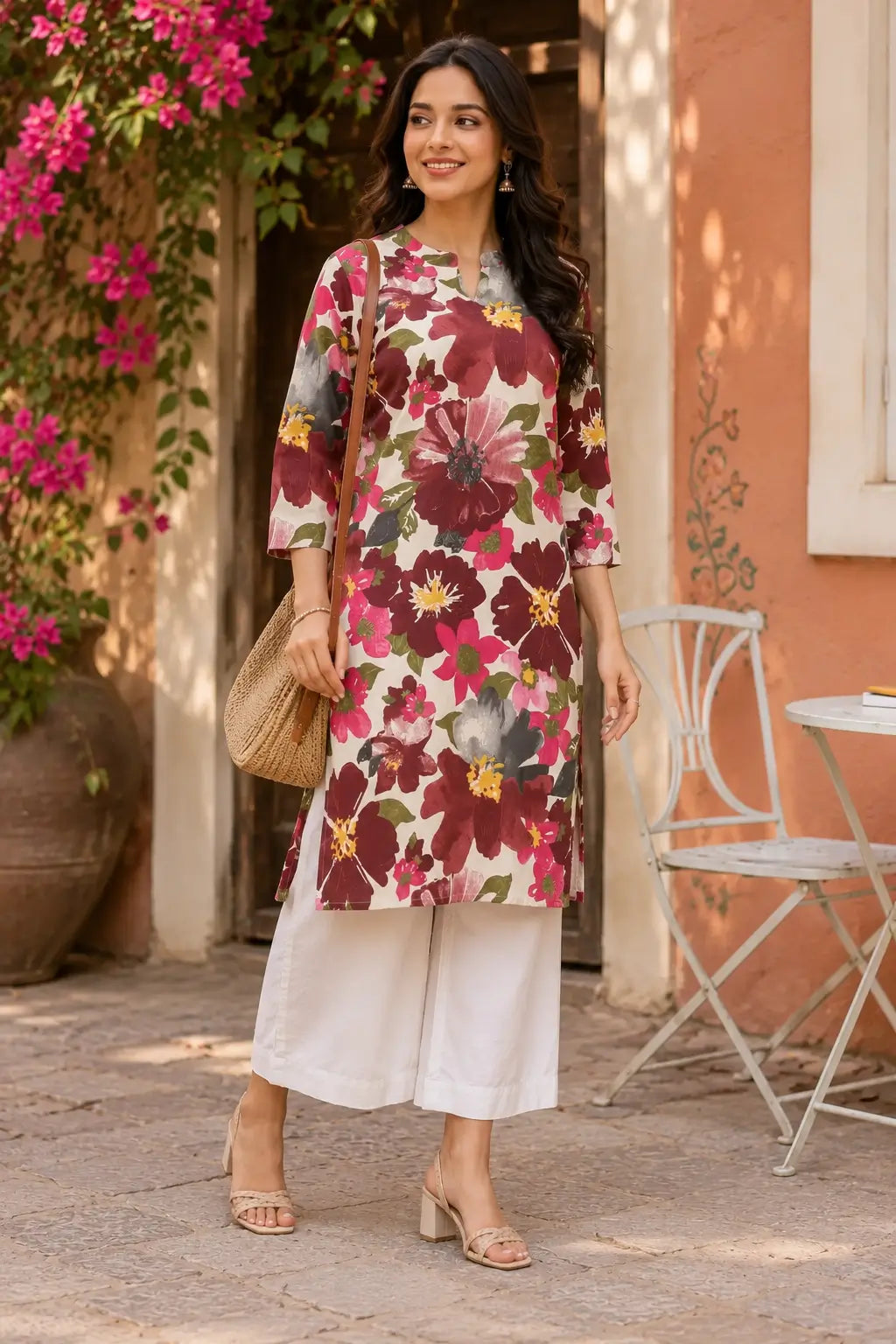
1. Straight kurti with comfortable pants
A straight kurti gives a clean office look and is easy to pair with several bottoms.
For desk work, choose a straight kurti that has:
- Comfortable hip width
- Side slits
- Regular rather than body-hugging fit
- Soft shoulder construction
- Three-quarter sleeves
- Sufficient room around the waist
Pair it with straight pants, ankle trousers or soft cigarette pants.
The kurti should fall neatly without gripping the stomach or hips when seated.
2. Controlled A-line kurti
An A-line kurti provides more ease around the waist and hip area.
It is useful for women who do not like fitted office outfits but still want a shaped silhouette.
Choose a controlled A-line rather than a very wide flare. Excess fabric can bunch around the chair or become difficult during commuting.
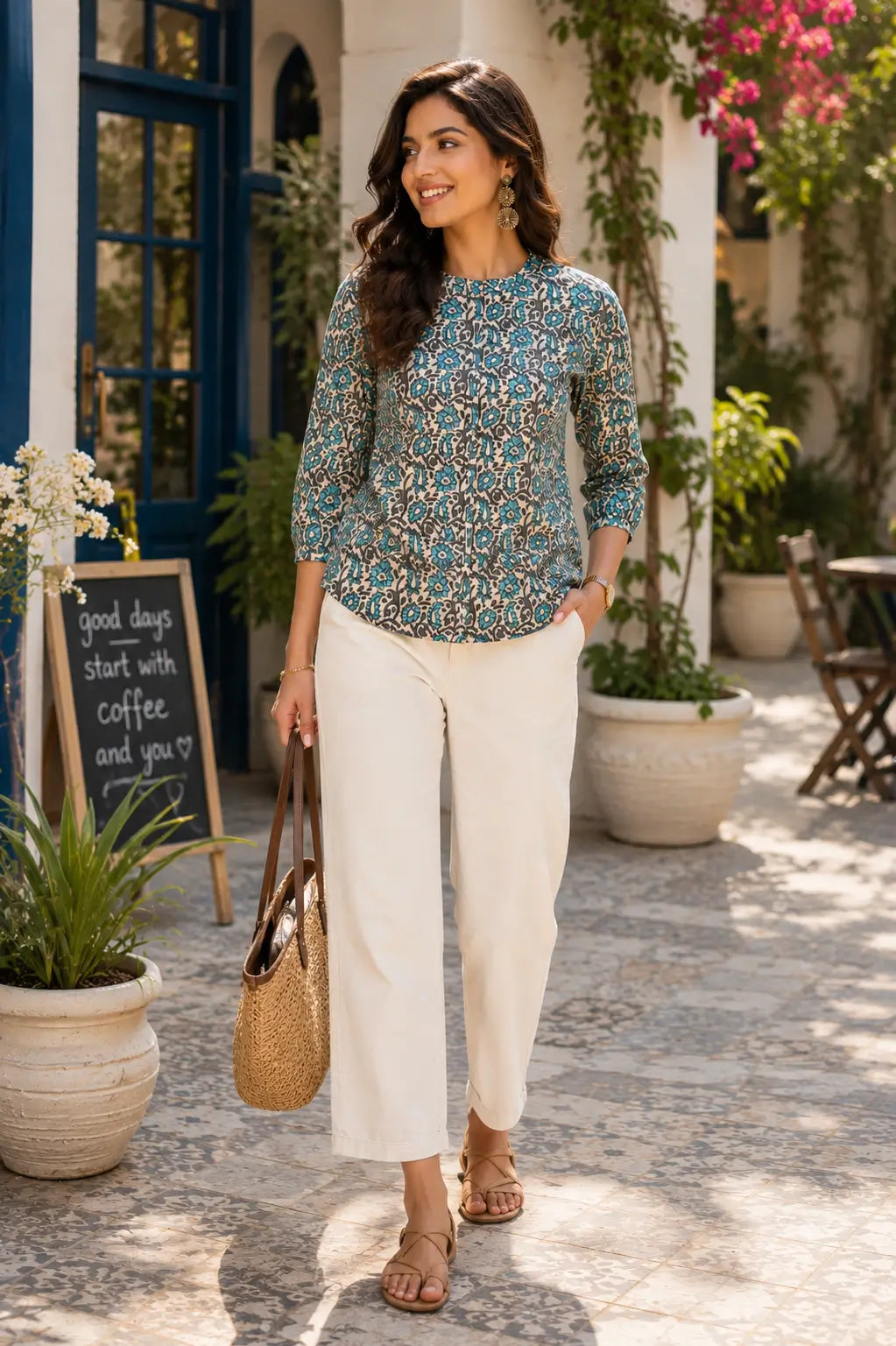
3. Kurta-pant set
A kurta-pant set can simplify morning dressing because the top and bottom are already coordinated.
For long sitting hours, check:
- Waistband softness
- Pant rise
- Hip ease
- Kurta side slits
- Shoulder movement
- Fabric thickness
- Whether the pant has a usable pocket
A relaxed cotton-slub set can provide structure without feeling excessively formal. This beige floral cotton-slub kurta-pant set for office wear is one example of a coordinated outfit with a straight long kurta, matching pants and an everyday silhouette.
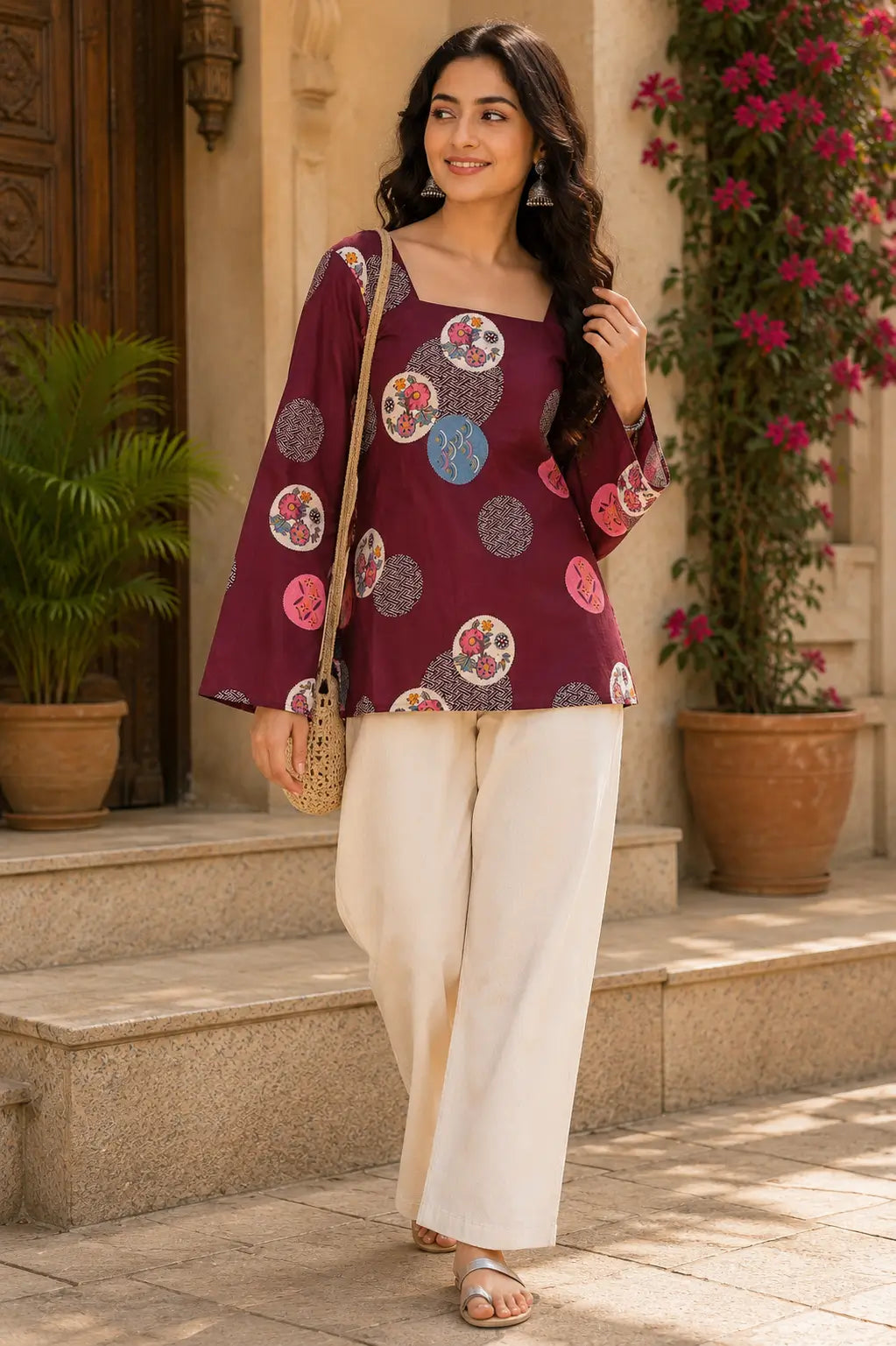
4. Office-friendly co-ord set
A co-ord set can work for desk-heavy jobs when the pieces are structured but not tight.
Choose:
- Relaxed straight or moderately wide pants
- Modest neckline
- Controlled print
- Breathable fabric
- Comfortable waist
- Minimal embellishment
Avoid lounge-style co-ords, tight crop sets and pants with uncomfortable elastic.
5. Long kurti with straight pants
A long kurti provides coverage and a polished ethnic look.
For sitting comfort, it should have enough width at the hem and side slits that allow the fabric to fall naturally around the chair.
Very narrow long kurtis may pull upward while sitting.
6. Structured tunic with trousers
A tunic can work well for women who prefer a shorter top.
The tunic should provide enough front and back coverage, especially when paired with office trousers.
Check whether it rides up after sitting for several minutes.
Choose Fabric According to the Full Workday
Fabric matters, but this article does not need to become a complete office-fabric comparison.
For long sitting hours, look for fabric that feels soft against the skin, does not become excessively stiff and suits both the commute and office environment.
Common office options include:
- Lightweight cotton
- Cotton flex
- Cotton slub
- Rayon or viscose
- Linen blends
- Cotton-rayon blends
- Selected lightweight crepe
- Modal or lyocell blends
The same fibre can feel different depending on weave, thickness, finishing and lining. A thick cotton kurti may feel warmer than a lightweight blend, while a very soft rayon garment may cling if the fit is too close.
For a detailed comparison based on structure, wrinkling, breathability, commute and maintenance, read our guide to the best fabrics for office wear kurtis.
Bottom Wear Matters as Much as the Kurti
Many women carefully select the kurti but treat the bottom as an afterthought.
For long sitting hours, the waistband, rise, thigh width and knee movement of the bottom can decide whether the outfit remains comfortable.
Straight pants
Straight pants are one of the most dependable office options. They look neat and usually provide more movement than very tight leggings.
Cigarette pants
Cigarette pants create a sharp look, but they should not grip strongly around the thigh or knee.
Partially elasticated pants
A partially elasticated waistband can combine a cleaner front with more flexibility at the back.
Soft elasticated pants
These can be comfortable when the elastic is broad and does not dig into the waist.
Moderate palazzos
A moderately wide palazzo provides movement while still looking office-appropriate. Extremely wide palazzos may become difficult around chairs, stairs and public transport.
Leggings
Leggings can work with longer kurtis, but very tight or low-quality leggings may feel restrictive after several hours.
How the Waistband Should Feel
The waistband should feel secure without creating pressure.
Check it:
- Before lunch
- After sitting for at least a few minutes
- While bending forward
- While standing up from a chair
- With the top tucked or untucked, where applicable
Avoid selecting a bottom only because it looks fitted while standing.
A waistband that already feels slightly tight during the trial is unlikely to become more comfortable through the day.
Check Kurti Fit in a Seated Position
Shoulder fit
The shoulder seam should sit close to the natural shoulder. If it pulls toward the neck while typing, the shoulder or armhole may be too small.
Bust ease
Buttons, seams and prints should not stretch horizontally across the bust.
Waist ease
The kurti should not grip the stomach when seated.
Hip width
Straight kurtis need enough room at the hip, particularly if the side slits begin lower down.
Armhole
Raise both arms as though reaching for a shelf. The kurti should not pull sharply across the chest.
Sleeve opening
The sleeve should not become tight when the elbow bends.
Back coverage
Check whether the back of the kurti rides up while seated.
Perform a Simple Office-Chair Test
Before keeping an outfit, try this short test:
- Sit on a chair normally.
- Lean forward as if typing.
- Raise both arms slightly.
- Cross and uncross your legs.
- Stand up without adjusting the outfit.
- Walk a few steps.
- Sit again after a minute.
Notice whether:
- The waistband presses
- The kurti rides up
- The sleeves pull
- The neckline shifts
- The fabric bunches excessively
- The bottom tightens at the knees
- You feel the need to adjust the outfit repeatedly
An office outfit should let you focus on your work instead of reminding you of its fit every few minutes.
Your Commute Can Change the Right Choice
A woman who works from a nearby office may have different clothing needs from someone who travels by metro, auto or office cab every day.
A commute adds:
- Walking
- Stairs
- Long sitting
- Heat and humidity
- Bag friction
- Crowded spaces
- Changes between outdoor heat and office air conditioning
For a long commute, choose manageable kurti lengths, secure necklines, practical sleeves and bottoms that remain comfortable in both standing and sitting positions.
Our detailed guide to comfortable commute outfits for working women covers metro, auto and office-cab dressing separately.
What to Wear in an Air-Conditioned Office
An outfit that works outdoors may feel too light inside a cold office.
Instead of wearing a heavy base outfit, use flexible layering:
- Lightweight shrug
- Neutral stole
- Soft cardigan
- Structured cotton jacket
- Full-sleeve shirt-style layer
The layer should be easy to remove during the commute.
Avoid very bulky layers that create additional fabric around the waist and back while sitting.
Necklines and Sleeves for Desk Work
Useful necklines
- Round neck
- V-neck
- Mandarin collar
- Notched neck
- Soft shirt collar
- Small keyhole neck
A collar should not press against the neck after several hours.
Useful sleeve lengths
- Three-quarter sleeves
- Elbow sleeves
- Lightweight full sleeves
- Neat short sleeves, where office-appropriate
Very tight sleeves can become uncomfortable during typing, writing and repeated arm movement.
Footwear Still Matters in a Desk Job
Even when most of the workday is spent sitting, footwear affects the commute, office movement and overall posture.
Useful options include:
- Loafers
- Ballet flats
- Comfortable sandals
- Low block heels
- Supportive juttis
- Minimal sneakers in casual offices
Avoid footwear that is uncomfortable during the walk from transport to the office.
Comfortable Does Not Mean Oversized
A comfortable outfit needs ease, not excessive volume.
An oversized kurti may:
- Fall awkwardly while sitting
- Catch under the body
- Look untidy in meetings
- Shift around the neckline
- Add unnecessary fabric around the chair
The ideal fit should provide movement while still maintaining a clear silhouette.
Complete the Rest of the Office Wardrobe
Long-sitting comfort is only one part of office dressing.
Workplace dress code, fabrics, short versus long kurtis, colours, prints, commuting and styling also affect the final wardrobe.
For the broader picture, read our complete office wear kurti guide for working women.
Online Buying Checklist for Desk-Friendly Workwear
Before buying an office outfit online, check:
- Garment measurements
- Bust and hip width
- Kurti length
- Side-slit height
- Pant-rise information
- Waistband construction
- Fabric composition
- Lining
- Sleeve measurements
- Model height and worn size
- Side and back photographs
- Wash-care instructions
- Return or exchange policy
Compare the measurements with an office outfit that already feels comfortable while sitting.
Common Mistakes
Buying only for standing appearance
Office clothes need to work while seated for most of the day.
Choosing a tight waistband
A waistband that feels fitted in the morning may become uncomfortable after lunch.
Ignoring hip measurements
This is especially important for straight kurtis and trousers.
Selecting very stiff fabric
Stiffness may create pulling or bunching around the shoulders and waist.
Wearing heavy embroidery at contact points
Embroidery near the back, armhole or neckline may rub against the skin or chair.
Ignoring the chair test
A quick sitting test can reveal fit problems immediately.
Choosing very tight bottoms
The knees and thighs need space while remaining bent.
Explore Comfortable Daily-Wear Kurtis
Once you know your preferred fit, compare kurti measurements, side slits, sleeves and fabric instead of choosing only by size labels.
Explore Rabric’s daily wear kurtis for women to compare straight, printed and everyday silhouettes.
Frequently Asked Questions
What should women wear if they sit all day at work?
Straight or controlled A-line kurtis, soft kurta-pant sets, comfortable trousers and office-friendly co-ords are practical choices.
Which kurti fit is best for long sitting hours?
A regular straight or controlled A-line fit with comfortable armholes, hip ease and side slits usually works well.
Are elasticated pants good for office?
Yes, when the elastic is soft, broad and not overly tight. The front construction should still look neat enough for the workplace.
Are leggings suitable for long office hours?
They can be, but very tight leggings may feel restrictive. Straight pants or comfortable ankle trousers often provide more ease.
Which fabric is best for sitting all day?
There is no single answer. Lightweight cotton, cotton flex, rayon, soft blends and selected linen blends may work depending on weave, fit and office environment.
How can I test office clothes before buying?
Sit, lean forward, raise your arms and stand up without adjusting the outfit. Check the waist, hips, armholes and neckline.
Are loose clothes always more comfortable?
No. Excessively loose clothes may shift or bunch. A slightly relaxed, well-proportioned fit is usually more practical.
What should I avoid for long desk days?
Avoid tight waistbands, stiff fabric, narrow armholes, tight knees, scratchy embellishment and garments that ride up while sitting.
Conclusion
Comfortable office clothes for long sitting hours should work with the body rather than restrict it.
Choose enough ease around the waist and hips, test the outfit while sitting and pay as much attention to bottom wear as you do to the kurti.
The right office outfit should still look professional, but it should not require constant adjustment through the day.
About the Author
Aditi Garg writes and reviews Rabric’s fabric, fit and everyday-wear guides. Her content focuses on practical clothing choices for Indian working women, long office routines and daily commuting.

