
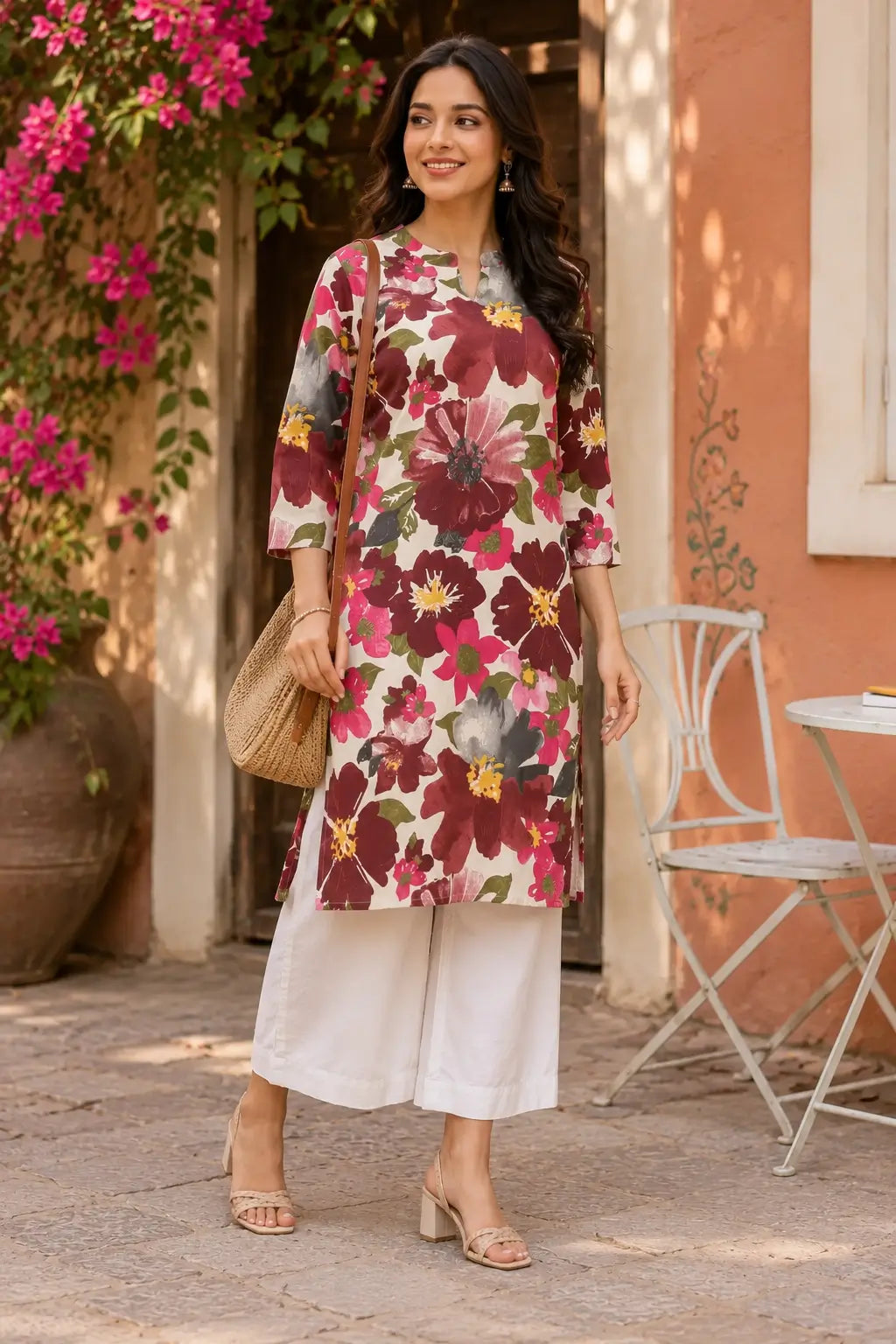
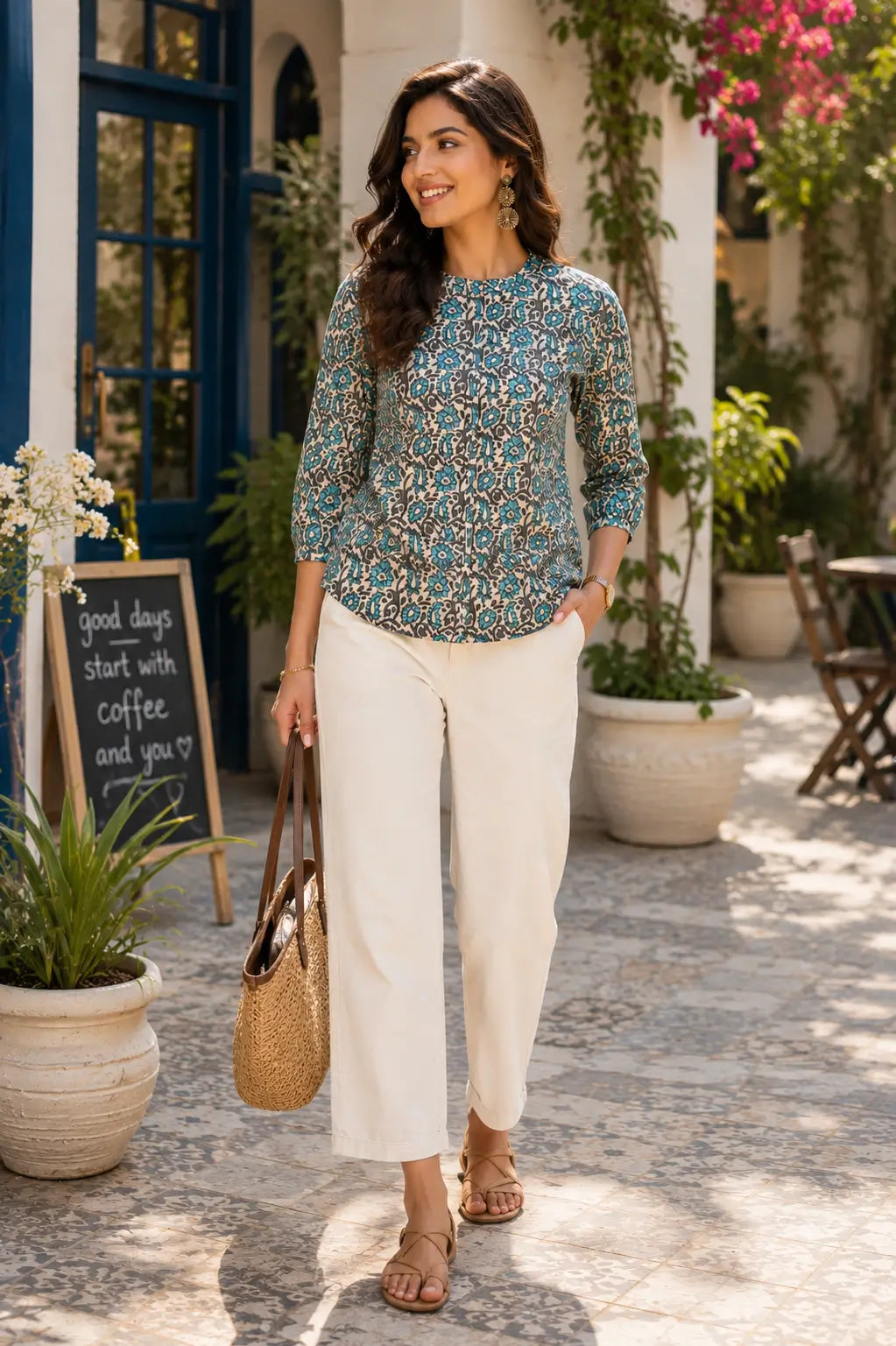
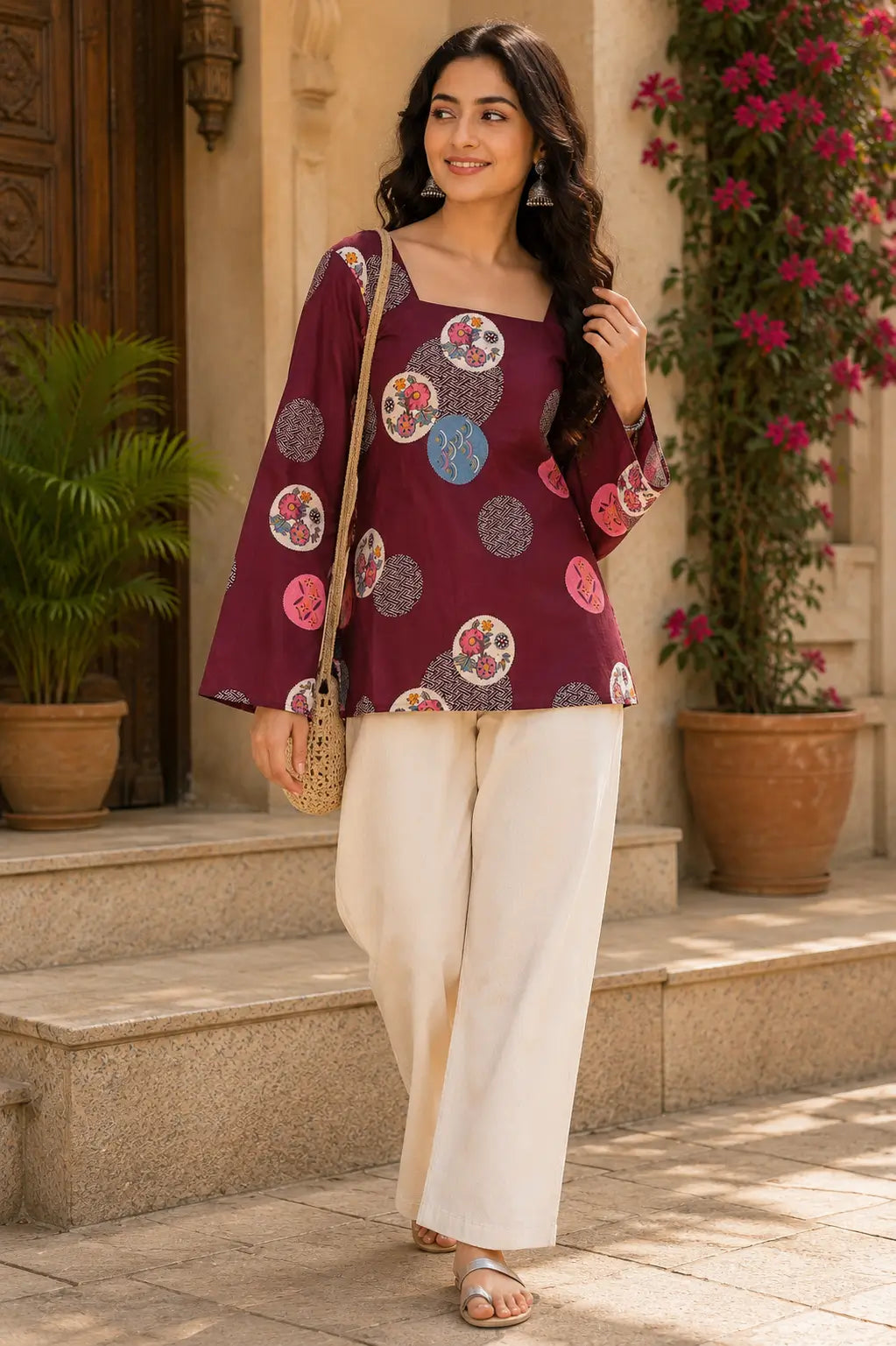


Cotton kurtis are among the most practical outfit choices for Indian summer, but simply seeing the word “cotton” in a product title does not guarantee that the garment will feel light or comfortable.
The comfort of a cotton kurti depends on its weave, thickness, finishing, lining, fit and the type of cotton used.
Lightweight cambric may provide a neat daily-wear look, mulmul feels softer and airier, cotton slub adds texture, while cotton flex gives the kurti more structure.
This guide explains how to choose the best cotton kurtis for summer in India based on cotton type, local weather, garment fit, transparency, lining, care and daily routine.
Quick Answer: Which Cotton Kurti Is Best for Summer?
The best cotton kurti for summer is generally made from a lightweight, breathable cotton fabric with a comfortable fit and minimal heavy lining.
Useful cotton options include:
- Cambric cotton for daily and office wear
- Mulmul cotton for peak summer heat
- Cotton voile for lightweight relaxed styles
- Cotton slub for textured daily wear
- Cotton flex for structured office kurtis
- Lightweight handloom cotton for a natural look
- Poplin cotton for shirt-style kurtis
The best option depends on whether you need the kurti for commuting, office, home, college or occasional dressing.
What Makes a Cotton Kurti Suitable for Summer?
Cotton fibre can be comfortable during summer, but the complete garment construction decides the final experience.
Consider these factors:
Fabric weave
A lightweight and airy weave generally feels more comfortable than a dense weave.
Fabric thickness
Thicker cotton may offer more structure and coverage but may feel warmer during peak heat.
Fit
Relaxed armholes, sufficient bust ease and comfortable hip measurements improve airflow.
Lining
A thick synthetic lining can reduce the comfort of a lightweight cotton outer fabric.
Transparency
Very lightweight cotton may require innerwear or lining.
Colour and print
Colour does not decide breathability, but very dark and dense garments may feel different during outdoor daytime use.
Care
Daily-wear cotton should suit your regular washing and ironing routine.
Types of Cotton Fabric Used in Summer Kurtis
| Cotton type | General feel | Best suited for | Main point to check |
|---|---|---|---|
| Cambric cotton | Smooth and moderately structured | Office and daily wear | Thickness |
| Mulmul cotton | Soft and airy | Peak heat and relaxed wear | Transparency |
| Cotton voile | Lightweight and soft | Casual summer kurtis | Lining |
| Cotton slub | Textured | Smart-casual and office wear | Fabric weight |
| Cotton flex | Structured | Office and long daily wear | Complete blend |
| Poplin cotton | Crisp | Shirt-style and short kurtis | Dense weave |
| Handloom cotton | Natural and textured | Casual daily wear | Shrinkage and colour |
| Cotton blend | Depends on composition | Easy-maintenance daily wear | Fibre proportions |
1. Cambric Cotton Kurtis
Cambric is a closely woven cotton fabric commonly used for printed and everyday kurtis.
It can provide a smooth surface and enough structure for straight and A-line silhouettes without looking excessively stiff.
Cambric cotton works well for:
- Office kurtis
- Daily commuting
- Printed long kurtis
- College wear
- Straight-fit designs
- Regular rotation
The fabric can vary in thickness. Check product close-ups and lining details before choosing cambric for peak summer.
2. Mulmul Cotton Kurtis
Mulmul is a fine and soft cotton fabric known for its lightweight feel.
It is especially useful during peak heat when you want the kurti to feel soft and less structured.
Mulmul cotton works well for:
- Relaxed kurtis
- Loose short kurtis
- Home wear
- Travel
- Casual daytime outfits
- Work-from-home wear
- Maternity-friendly styles
Because mulmul can be sheer, check whether the garment uses lining. Light lining may provide coverage, but thick lining can make the kurti feel warmer.
3. Cotton Voile Kurtis
Cotton voile is generally lightweight and soft. It can work well for relaxed summer kurtis, printed styles and layered ethnic outfits.
Cotton voile is useful for:
- Lightweight long kurtis
- Casual summer outfits
- Flowy cotton styles
- Daytime dressing
- Loose silhouettes
Voile may require lining because of its lightweight construction. Check whether the lining remains breathable.
4. Cotton Slub Kurtis
Cotton slub has an intentionally textured surface. The fabric contains slight variations that create a natural and casual appearance.
Cotton slub can work well for:
- Smart-casual kurtis
- Office wear
- Minimal printed designs
- Solid kurtis
- Straight and A-line silhouettes
Some cotton slub fabrics may feel more structured or heavier than mulmul. Check the thickness before choosing one for peak summer afternoons.
5. Cotton Flex Kurtis
Cotton flex is useful when you want a more structured silhouette that stays neat during office hours or long daily wear.
It works well for:
- Office kurtis
- Straight-fit designs
- A-line silhouettes
- Daily commuting
- Long sitting hours
- Smart-casual outfits
Cotton flex may include blended fibres depending on the garment. Review the complete composition rather than relying only on the product title.
A lightweight cotton-flex garment may work well in summer, but a dense or heavily lined version may feel warmer.
6. Poplin Cotton Kurtis
Poplin cotton has a crisp appearance and is often used for shirts, shirt-style kurtis and structured short tops.
It works well for:
- Shirt kurtis
- Collared designs
- Short kurtis
- Office wear
- Casual tops
- Smart everyday looks
Poplin varies in weight and density. A lightweight version can be summer-friendly, while a thick and tightly woven version may feel warmer.
7. Handloom Cotton Kurtis
Handloom cotton often has a natural texture and a less uniform appearance than machine-finished fabrics.
It can work well for:
- Casual daily wear
- Minimal ethnic styles
- Straight kurtis
- Relaxed office outfits
- Women who prefer natural texture
Handloom cotton may need careful washing, particularly during the first few washes. Check colour-care and shrinkage instructions.
Lightweight Cotton vs Thick Cotton
Not every cotton fabric is equally suitable for peak summer.
Lightweight cotton
Generally works well for:
- Commuting
- Long summer days
- Casual wear
- Office
- College
- Relaxed silhouettes
Thick cotton
May work better for:
- Mild weather
- Structured silhouettes
- Air-conditioned offices
- Transitional seasons
- Garments that require more shape
A thick cotton kurti may still be comfortable indoors, but it may not be the best option for long outdoor use.
Cotton GSM: Is a Lower Number Always Better?
GSM refers to fabric weight, but GSM alone does not decide whether a cotton kurti will feel comfortable.
A lightweight fabric may still feel uncomfortable if it has:
- A dense weave
- Stiff finishing
- Heavy lining
- A tight fit
- Multiple layers
A slightly heavier cotton may feel comfortable if it has:
- An airy construction
- Relaxed fit
- Light lining
- Soft finishing
- Suitable garment design
Choose by complete garment construction rather than relying only on one GSM range.
Best Cotton Kurti for Hot and Dry Weather
For hot and relatively dry weather, useful cotton choices include:
- Mulmul
- Cotton voile
- Lightweight cambric
- Handloom cotton
- Soft printed cotton
Choose a kurti with:
- Relaxed armholes
- Comfortable waist
- Minimal layering
- Light sleeves
- Sufficient movement around the hips
Best Cotton Kurti for Humid Weather
Humidity can make sweat evaporate slowly. The cotton kurti should not be excessively fitted or heavily lined.
Useful choices include:
- Lightweight cambric
- Mulmul
- Cotton voile
- Soft handloom cotton
- Selected light cotton blends
Check whether the fabric:
- Feels dense
- Is heavily lined
- Clings around the waist
- Takes very long to dry
- Uses multiple layers
Best Cotton Kurti for Office Wear
An office cotton kurti should balance comfort and structure.
Useful cotton options include:
- Cotton flex
- Cotton slub
- Cambric cotton
- Lightweight poplin
- Cotton-linen blend
- Structured handloom cotton
Look for:
- Comfortable armholes
- Straight or A-line fit
- Suitable garment length
- Non-transparent fabric
- Manageable wrinkling
- Easy washing
- A neckline appropriate for long wear
Best Cotton Kurti for Travel and Commuting
For metro, auto, cab or bus travel, choose cotton kurtis that allow easy movement.
Consider:
- Lightweight fabric
- Comfortable shoulder
- Relaxed sleeves
- Sufficient hip room
- Side slits
- Easy washing
- Minimal heavy embellishment
- Fabric that does not require constant adjustment
Very loose clothing is not automatically more comfortable. The garment should fit properly while still allowing movement.
Best Cotton Kurti Styles for Summer
Straight cotton kurti
Suitable for office, college and daily use. It looks neat and is easy to pair with pants, leggings or palazzos.
A-line cotton kurti
Provides more ease around the waist and hips. It works well for long sitting hours and casual styling.
Short cotton kurti
Pairs well with jeans, trousers and skirts. Check the hip width and whether the fabric stays comfortable while sitting.
Shirt-style cotton kurti
Useful for office and smart-casual looks. Lightweight poplin, cotton flex and cambric can work well.
Printed long cotton kurti
A versatile option for daily wear, casual outings and office dressing.
Cotton kurta-pant set
Useful when you want a complete coordinated outfit without spending time matching separate pieces.
To see how cotton fabric, a straight fit and a printed daily-wear design work together, view this mustard yellow cotton long kurti for women.
Cotton vs Other Summer Fabrics
Cotton is a dependable all-round summer fabric, but other fabrics may suit specific needs.
Cotton vs rayon
Cotton is generally more practical for frequent washing and long daily use. Rayon provides a softer and more fluid drape.
Cotton vs linen
Cotton is generally easier for everyday care, while linen offers a more textured and structured appearance.
Cotton vs mulmul
Mulmul is a type of fine cotton. It feels lighter and softer but may require more care and lining.
Cotton vs modal
Cotton provides a more natural and structured feel, while modal is smoother and more fluid.
Cotton vs Chanderi cotton
Regular cotton is more suitable for daily wear. Chanderi cotton is generally chosen for a dressier appearance.
Cotton is one part of a wider summer-fabric decision. For a detailed comparison including rayon, linen, mulmul, modal and cotton flex, read our complete summer fabric comparison for kurtis.
Cotton vs Linen for Summer Kurtis
Cotton and linen are both popular in summer, but they offer different benefits.
| Factor | Cotton | Linen |
|---|---|---|
| Initial softness | Generally softer | Usually crisper |
| Structure | Depends on weave | Naturally structured |
| Wrinkling | Moderate | High |
| Daily washing | Generally practical | Requires more care |
| Hot-dry weather | Suitable | Very suitable |
| Humid weather | Lightweight cotton is practical | Depends on weave |
| Office wear | Versatile | Smart and minimal |
| Price range | Wide | Usually higher |
Cotton may be better for regular washing and broad daily use. Linen may be better for women who prefer a crisp, textured and structured look.
For a more detailed decision based on comfort, wrinkles, care and daily wear, read our linen vs cotton kurti comparison.
How to Identify Genuine Cotton Kurtis Online
The word “cotton” in a product title is only the starting point.
Before buying, check:
- Complete fabric composition
- Whether it is pure cotton or a blend
- Fabric close-up photographs
- Weave and texture
- Lining
- Transparency
- Garment measurements
- Model height and worn size
- Wash-care instructions
- Customer reviews
- Return or exchange policy
Product-description warning signs
Be cautious when the listing only says:
- Cotton feel
- Cotton-like
- Summer fabric
- Soft material
- Premium cotton touch
These phrases may not explain the actual fabric composition.
For a complete checklist covering fibre labels, weave, lining, fit and product photographs, read how to identify breathable fabrics for summer kurtis.
How to Check Cotton Fabric After Delivery
Before removing tags or washing the garment, check:
Skin feel
Wear the kurti indoors briefly and observe whether the fabric feels stiff, rough or warm.
Fit
Sit, walk and move your arms. The garment should not feel tight around the armhole, waist or hips.
Transparency
Check the fabric in natural light.
Lining
Confirm whether the lining feels heavier than expected.
Fabric composition
Compare the garment label with the product listing.
Stitching
Inspect seams, sleeve attachment and side slits.
Follow the return policy and avoid washing or damaging the product before deciding whether to keep it.
Cotton Kurti Fit Guide for Summer
Fabric comfort improves when the fit allows airflow and movement.
Check:
- Shoulder position
- Bust ease
- Armhole
- Waist
- Hip width
- Sleeve opening
- Side slit
- Garment length
A summer kurti should not become tight while sitting or require frequent adjustment while walking.
Lining and Transparency
Lightweight cotton may be slightly transparent, especially in:
- White
- Beige
- Pastels
- Mulmul
- Voile
- Fine cambric
Lining can improve coverage but also adds another layer.
A good summer garment should balance:
- Coverage
- Breathability
- Fabric weight
- Movement
- Comfort
Check whether full lining is necessary or whether suitable innerwear can provide enough coverage.
Cotton Kurti Colours and Prints for Summer
Colour does not replace fabric comfort, but it influences styling and daytime practicality.
Popular summer choices include:
- White
- Beige
- Lavender
- Pastel pink
- Sky blue
- Mint green
- Yellow
- Small floral prints
- Geometric prints
- Hand-block-inspired prints
- Subtle stripes
Dark colours can also be worn in summer when the fabric and fit are comfortable. Avoid choosing only by colour while ignoring construction.
Cotton Kurti Care Tips
Always follow the garment care label first.
General cotton-care tips include:
- Wash dark and light colours separately
- Use gentle detergent
- Avoid excessively hot water
- Do not leave printed garments soaking unnecessarily
- Dry in shade when recommended
- Reshape before drying
- Avoid harsh twisting
- Iron according to the care label
- Store only when completely dry
- Check colour behaviour during early washes
Mulmul, handloom and embellished cotton garments may require gentler care than ordinary daily-wear cotton.
Common Mistakes When Buying Cotton Kurtis
Assuming every cotton kurti is breathable
A thick or densely woven cotton may feel warm.
Ignoring the blend
The garment may include other fibres.
Choosing a tight size
Fit affects comfort as much as fabric.
Ignoring lining
Heavy lining can change the final feel.
Choosing only by GSM
Weave, finishing and fit also matter.
Ignoring transparency
Light cotton may require lining or suitable innerwear.
Ignoring shrinkage instructions
Incorrect washing may affect garment measurements.
Buying only by print
A beautiful design cannot compensate for uncomfortable construction.
Quick Cotton Kurti Buying Checklist
Before placing an order, confirm:
- Complete cotton composition is mentioned
- Cotton type or weave is explained
- Fabric close-up is available
- Lining details are mentioned
- Garment measurements are provided
- Model height and worn size are available
- Fit allows summer movement
- Transparency has been considered
- Wash care suits your routine
- Return or exchange terms are clear
Frequently Asked Questions
Which fabric is best for summer kurtis in India?
Cotton is the best fabric due to its breathability and moisture absorption.
Are cotton kurtis suitable for daily wear?
Yes, cotton kurtis are ideal for daily wear because they are comfortable and skin-friendly.
What style of kurti is best for hot weather?
Straight-fit, A-line, and short cotton kurtis work best in hot weather.
Can cotton kurtis be worn to the office?
Yes, structured cotton kurtis with minimal prints are suitable for office wear.
How do I know if a kurti is breathable?
Check for pure cotton fabric, lightweight texture, and relaxed fit.
Do cotton kurtis shrink after washing?
Pure cotton may shrink slightly; washing in cold water helps prevent this.
Conclusion
The best cotton kurtis for summer in India combine a suitable cotton fabric with comfortable garment construction.
Choose mulmul or cotton voile when you want an extremely light feel. Choose cambric for versatile daily wear, cotton slub for texture and cotton flex for a more structured office look.
Do not judge a cotton kurti by the fabric name alone. Check its weave, thickness, lining, transparency, fit, measurements and wash-care requirements.
To compare additional cotton and cotton-flex silhouettes by fit, print and fabric description, explore Rabric’s women’s long kurti collection.
About the Author
Aditi Garg writes and reviews Rabric’s fabric, fit and everyday-wear guides. Her content focuses on helping women evaluate garment construction, fabric composition and practical comfort while shopping for Indian ethnic wear.

